
Founder From Uzbekistan Builds Distribution Automation Service and Reaches $4M in Company Revenue



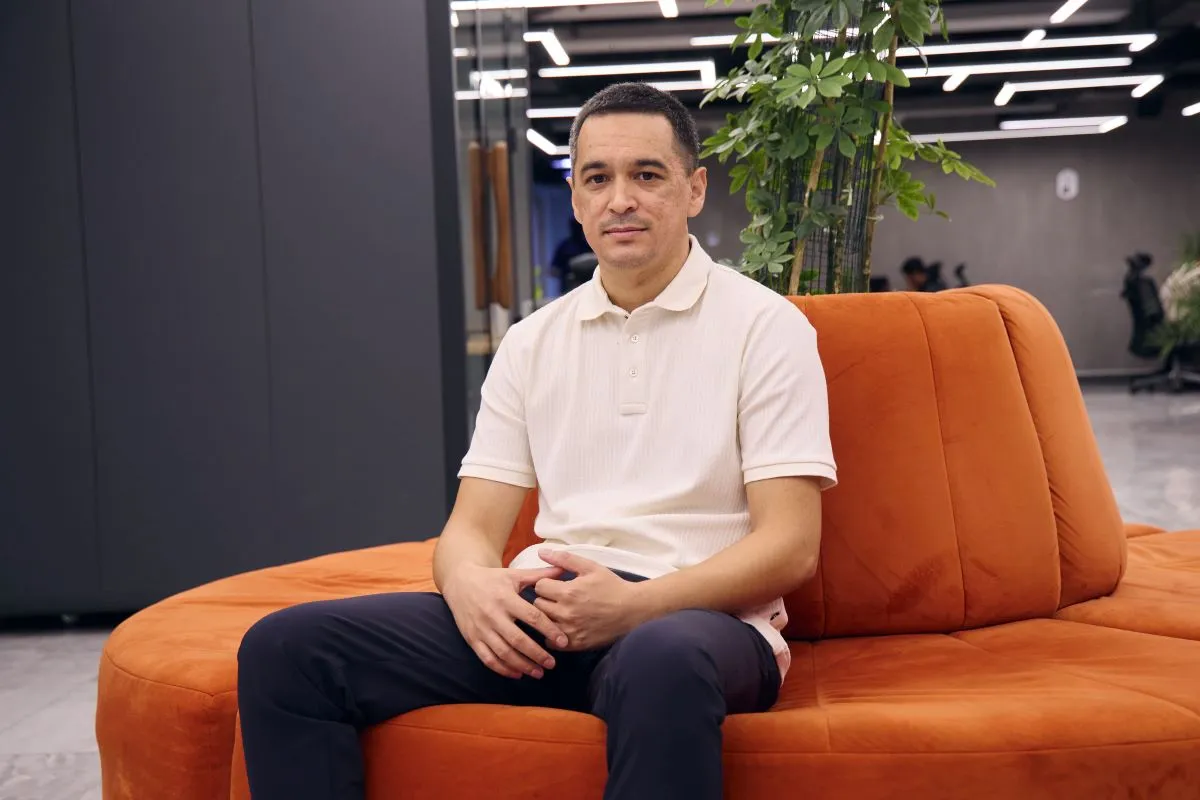
Отабек Сувонов
Back in 2014, while working in FMCG distribution, Otabek Suvonov from Tashkent realized that the industry lacked an automated way to track inventory and sales. Soon after, he and a friend built a product that helps stores know exactly how much they have sold, what is left in stock, and what they still need to order from suppliers.
Today, his startup Sales Doctor already operates across several Central Asian countries and is preparing to enter Saudi Arabia. For the joint Digital Business and Astana Hub project “100 Startup Stories from Central Eurasia,” Otabek shared the mistakes he made on the road to success, what he had to change inside the company to support its growth, and what comes next for Sales Doctor.
“Failure taught me some important lessons”
– Otabek, can you tell us a little about your background: where you studied, where you worked, and how you came to launch Sales Doctor?

– I studied Business Administration at Westminster International University in Tashkent. In 2011, during my fourth year, I dropped out. I had the money to pay my tuition, but I spent it on my first startup instead. There were a couple of times when I thought I had made the wrong choice, but overall, I don’t regret it.
The project was in real estate. I wanted to create a single database of new residential developments in Tashkent. While I was at university, I worked as a real estate agent, and clients kept asking where the good new buildings were going up. We could find them, but it was much harder to figure out things like apartment sizes, infrastructure, and prices. So I decided to build a website where people could browse the available apartments.

But the startup failed. At the time, there were still relatively few new residential developments in Tashkent. The construction boom only really started about five years later. In a way, the project was ahead of its time, because today there are websites like that and they work well. Another mistake I made was spending the money I had on expensive advertising. Still, the experience taught me a lot.
– What happened next?
– After that, a friend and I launched a coupon website for different products and services. That model was only just starting to gain popularity. The product itself was strong in terms of launch, marketing, and design, but the unit economics didn’t work, so we were losing money. For quite a while, we covered the losses with investment funding.

Eventually, the product shut down, but we had managed to build a good reputation for ourselves. That was also where I met my future Sales Doctor co-founder, Adkham Bozorov, the lead developer who built the product.
After the project closed, I took a corporate job at Mars. I worked there as a supervisor and gained a lot of useful experience. Later, I joined a local juice and nectar producer as a regional manager. We kept running into the same problem with product shipments. Whenever the director asked for regional sales figures, say, how much we had sold in Samarkand or Fergana, I often couldn’t give him an answer because there was no proper system for tracking the data. Technically, the records existed, but everything was handled in a very outdated way: some people sent figures through a messenger app, others emailed them, and some would just call or send an SMS.

– So there was no single system?
– Yes. Every week, I had to pull together the sales and inventory figures. And there was this moment when someone asked me what was going on, and I simply didn’t know. We were working away, but we still had no overall picture of what was happening across the company. So I went to Adkham Bozorov and said, “Build me a simple website where my distributors can log in every day and enter their sales, inventory levels, and number of retail outlets.”
But as we talked through the project, we started thinking it should be a standalone product that we could sell ourselves. And that became Sales Doctor.
“It took us six years to turn our first profit”
– What stages did Sales Doctor go through along the way?
– We started writing the first code in December 2014. For about a year and a half, we worked on the product as a side project, testing it mainly at the company where I was working. Less than a year in, we had our first user. An acquaintance of ours who distributed snacks started using the system, and things began to pick up.

We hired a developer and a sales team and started making our first mistakes. For example, I used some of our already limited funds for personal reasons: I repaid a debt to a close friend, and that left us with a cash flow gap. I also made the classic optimist’s mistake of expecting sales to be strong and expenses to stay low. For a long time, the reality was exactly the opposite.
It was tough, but we brought on Alisher Isaev, a well-known entrepreneur in Uzbekistan, as a co-founder. He invested some money and started helping us bring in clients. We spent the next few years developing and selling the product, but for a long time we barely made any money. The business could support itself, but we wanted more. In 2016, I left my job to focus on Sales Doctor full-time.

– When did you first feel like things were starting to work?
– We made our first decent profit in early 2020, when revenue reached around $20,000 a month. For comparison, our MRR today is $320,000. We got there gradually, though, bringing in new clients and improving the product along the way. Large companies didn’t come on board straight away. In the beginning, most of our revenue came from small and medium-sized businesses.
– What exactly does your company offer businesses?
– We provide solutions that automate business processes in distribution and retail. The Sales Doctor ecosystem includes three products.
Sales Doctor helps FMCG distributors run their operations in one place. It brings together orders, inventory, payments, and analytics, so companies can see sales and stock levels in real time and keep track of how their teams are performing, from sales figures to targets and KPIs. Essentially, it replaces a patchwork of spreadsheets and manual processes with one system for managing the entire distribution business.

The second product, Ibox, focuses on inventory management and retail automation, but for a different type of business: building materials, home appliances, auto parts, and similar products. Most of our clients here come from segments where traditional distribution models don’t really apply. For example, companies selling through bazaars, markets, or shopping centres. The system lets them manage orders, stock, and finances from a single interface, while also giving them sales analytics and KPI tracking for their sales reps.
The third product, Idokon, is a POS system for grocery stores. It helps retailers digitize in-store sales, mainly in small and medium-sized grocery shops.

“We’re betting big on Kazakhstan right now”
– How many clients do you have now, and what’s your business model?
– More than 3,000. We use a subscription model, with plans starting at $15 per month. Clients can also subscribe quarterly or annually.
From day one, clients paid for our products. We never gave them away for free. It wasn’t a particularly deliberate decision at the time, but looking back, I can see that many young founders are afraid to charge and then struggle to find product-market fit. Even if your product isn’t perfect yet, I still think people should pay to use it.

– What problems do clients usually come to you with, and what does Sales Doctor give them in return?
– When I worked in distribution myself, we used to lose a lot because orders were processed incorrectly and stock records were all over the place. Sales Doctor helps companies keep that side of the business much more organized and accurate, while also helping them generate more orders.
For example, a sales rep might be expected to visit 20 stores a day. Without proper tracking, there’s a good chance they won’t make it to all 20. Say they visit 12 stores and get 6 orders. With a system like ours, they’re much more likely to complete the full route. If the conversion rate is around 50%, that means 10 orders instead of 6, simply because you can track whether the rep is doing the work they’re supposed to do.

The system also tracks KPIs, stock levels, and inventory, and we see our clients’ sales grow by at least 20%. The biggest change is probably the market itself. When we started out, we had to convince distributors to move away from paper and go digital. Over the past couple of years, that conversation has completely changed. They’re no longer asking whether they need software. They’re asking who they should buy it from.
– Sales Doctor is now an international company. Which markets are you currently operating in?
– I stepped away from the company for a while, then came back in September 2024 with a clear goal: to turn Sales Doctor into a global IT company. So far, we’ve expanded into several Central Asian markets.
Right now, we’re putting a lot of focus on Kazakhstan. We’ve already strengthened our presence there, but Uzbekistan still accounts for 80% of our revenue, Kazakhstan 15%, and Kyrgyzstan 5%. Over the next six months, we plan to double our revenue in Kazakhstan from where it is today. Judging by the numbers, Kazakhstan actually has the potential to bring in about one and a half times as much revenue as Uzbekistan.

“We want to raise $4 million in investment”
– And in terms of annual revenue, what kind of numbers are we talking about?
– In the first seven months of this year, we made around $2.1 million. Our ARR is now at about $4 million.
– You said you want to turn Sales Doctor into a global IT company. What are you doing to make that happen?
– We’re not stopping at Central Asia. In 2025, we started looking at new markets for expansion. We explored the Middle East, with a particular focus on Saudi Arabia, and then travelled to the United Arab Emirates to see how the market works there. We’re interested in growing Sales Doctor in Saudi Arabia and will be entering the market soon. By the end of the year, we plan to sign our first 15–20 clients there.

Last year, we joined two accelerator programs. The first was Al Farabi, organized with the support and participation of Plug and Play, Kazakhstan-based Tumar Ventures, and Aramco. We spent two months there, learning the market and figuring out what we needed to do to enter it.
In September 2025, the startup was selected for the AlchemistX & Silicon Valley Residency program, supported by Astana Hub and IT Park Uzbekistan, along with venture funds Astana Hub Ventures and IT Park Ventures. The program took place in the US, where we spent two months. We originally wanted to enter the US market and see how we’d do there, but eventually dropped the idea, mainly because we didn’t want to relocate to the US.

– Is your company also a resident of any Central Asian tech hubs?
– We’re members of Astana Hub and IT Park Uzbekistan, and both offer us very attractive tax benefits.
– What are your plans for raising investment?
– For the past 10 years, we’ve barely raised any external funding. We only took on a small amount of angel investment at the very beginning. Other than that, we’ve grown the business on our own.

We’re profitable, but we also understand that building a large global IT company will probably require outside investment. So in early June, we opened a new $4 million round and have now started talking to venture funds.
We plan to invest that money in new markets and new products. We already have enough resources to keep growing across Central Asia and to support and improve our existing product. Expanding into new markets will probably require additional funding. We’re currently in talks with potential investors and looking at different offers.