
Azerbaijani Startup Launches Corporate Fitness Membership Service and Reaches $12 Million in Annual Revenue




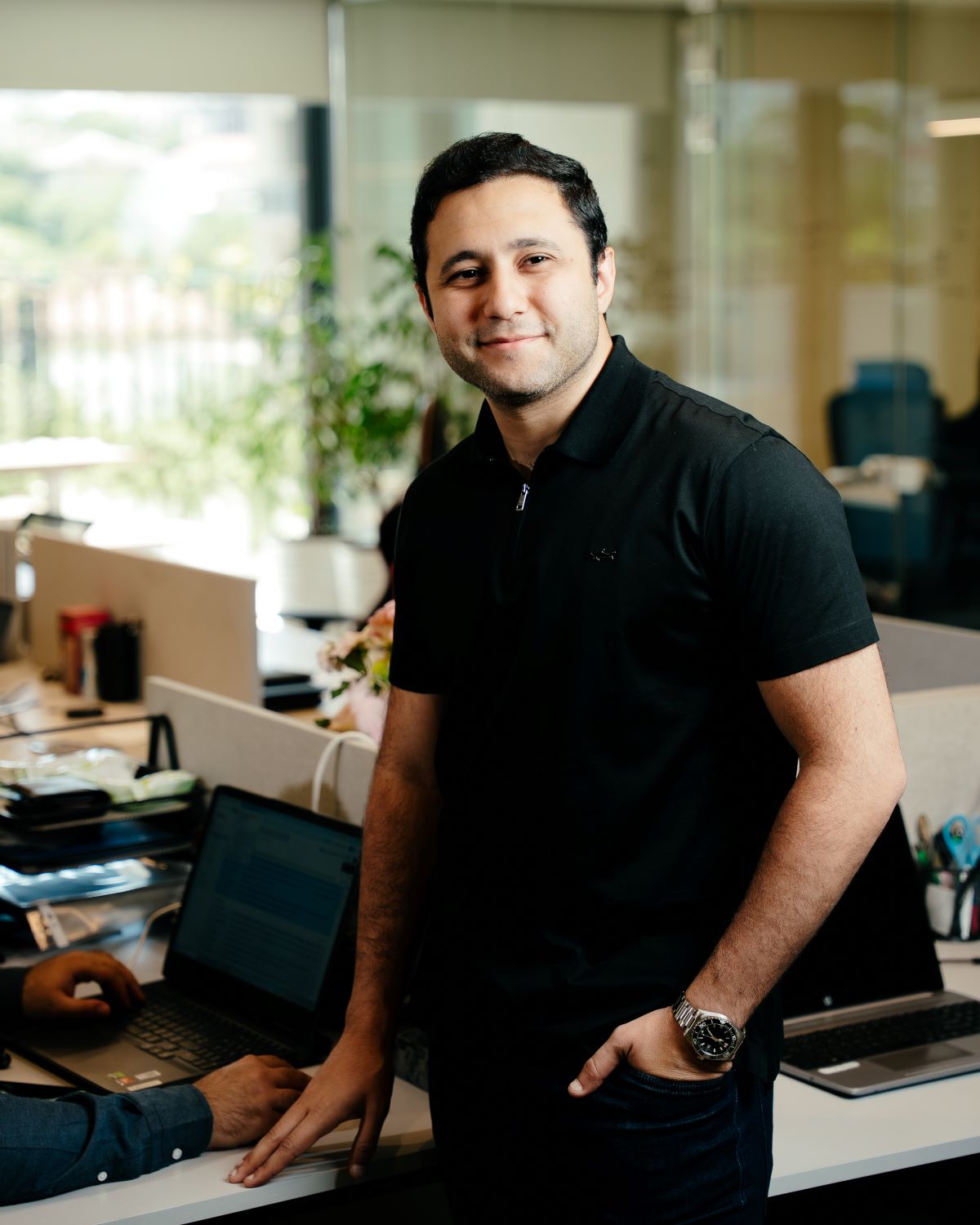
Адиль Гасымов / Adil Gasimov
In 2019, Adil Gasimov and his partners launched Push30, a corporate fitness platform that gives employees access to gyms, spas, and wellness centres through a single membership. Today, the startup works with 5,000 companies across Azerbaijan, Uzbekistan, and Kazakhstan, and brings in $12 million a year.
For Digital Business and Astana Hub’s joint project, “100 Startup Stories from Central Eurasia”, Adil spoke about how the team barely made it through the COVID-19 pandemic before going on to grow across three markets. We also discussed the $2.5 million the company has raised so far, as well as a new $7.5 million funding round that should help turn Push30 into a full employee health platform.
“Why wait for illness to strike when you can stop it before it starts?”
– Adil, what were you doing before you launched the startup?

– When I was 16, my parents sent me to study in England. I completed a bachelor’s degree in Business Computing Systems, followed by a master’s in Information Systems and Technology at City, University of London. After that, I moved back to Baku and joined Kapital Bank, one of the largest banks in Azerbaijan. I started out in the strategic development department, then moved through several roles and gained experience across different parts of the bank.
At the same time, I was also trying to build businesses of my own, but almost all of them failed. By 2019, the only ones still running were a hotel business and a travel agency.
– How did you come up with the idea for Push30?
– I met my future business partner while I was at Kapital Bank. He was working for McKinsey at the time, and the firm was running a project for the bank. We had lunch together a few times and started out talking about work, but the conversation soon moved on to our own ideas. Eventually, we decided to launch a startup together.

We sat down, made a list of ideas, and started narrowing them down. Could the product scale? Could we build a sustainable business around it? Would it be genuinely useful to people? And was the market big enough?
We gradually whittled the list down to just a few ideas. One of them was a corporate service that would help companies support their employees’ health, and that was the one we decided to pursue.
We brought in a third partner, left our jobs around the same time, and launched Push30.
– What was the idea behind the business?
– We wanted to build a health benefit that was easy to understand and genuinely useful to employees. Companies usually provide medical insurance, but that is there for when someone gets ill. We wanted to turn that idea on its head: why wait for illness when you can help prevent it?
The idea was to give employees access, through one app, to a range of gyms, swimming pools, spas, and wellness centres. That way, everyone could choose whatever suited them best.

“We took out loans and got into debt just to pay salaries and support our families”
– How did you get started?
– We set up the company, drew up a standard contract, and got the payment system in place. We did not have an in-house tech team at that point, so we hired an external development team. Three months later, the first version of the product was ready.
At the same time, we were signing up partners and hired a team of around ten people to handle that side of the business. Then COVID-19 hit. Hotels, travel agencies, and fitness clubs all shut down.
It was a really tough period. Within a few months, I had used up all my savings. We could not bring ourselves to let the team go because they had put their trust in us when they joined. So we took out loans and got into debt just to keep paying salaries and support our families. That carried on until sports centres reopened in June 2021.
– How did the market respond once the COVID restrictions were lifted?
– Sales picked up quickly. It feels a bit uncomfortable to say that we benefited from something as serious as the pandemic, but that is what happened. During lockdown, a lot of people’s gym memberships had expired, and companies were reviewing the benefits they offered employees. That made our conversations much easier because many businesses were already looking for some kind of fitness option for their teams.

Before that, companies would usually pay for access to one particular gym or fitness centre. We offered something much more flexible: one corporate membership that gave employees a choice of 200 locations. It took us months to build that network. We had to speak to every gym individually, explain how the model worked, and bring them onto the platform. It made sense for the gyms too, because Push30 brought them corporate customers.
Not every company was willing to pay for it at first. A lot of them said they had more pressing priorities and no budget for new employee perks. But once we signed a few early customers, things started to change. They tried the service, saw that employees actually liked using it, and word began to spread. From there, trust in the product grew steadily.
– What kind of companies were they?
– They were large consulting and audit firms, including KPMG, Deloitte, EY, PwC, and McKinsey.
Then banks, construction companies, and insurers started coming on board as well. The client base grew steadily, and today we work with around 5,000 companies and have 23,000 users.
“You can’t get 100% of people to exercise regularly”
– What does Push30 look like from the client’s side and from the employee’s side?
– For companies, Push30 is a simple way to manage their employee fitness benefit. They can choose a plan, add staff, see how people are using the service, and handle everything in one place instead of setting up separate deals with different gyms and spas.
For employees, it is a mobile app. They open Push30 and can browse all the partner venues and services available to them.

– How do customers pay for the service?
– We offer a range of subscription plans. On average, companies pay around $80 to $90 per employee each month. The final price depends on the market, how many employees are signed up, which plan the company chooses, and how long the contract runs for.
At the end of each month, we look at how many visits were made across the different venues, pay our partners, and keep our margin.
– What happens if employees use the service so much that the amount you have to pay your partners is higher than what the company paid you?
– That risk does exist. But if usage gets so high that it starts eating into our margin, we would review the price. We would explain that employees are using the service more, our payments to partners have gone up, and we cannot provide the service at a loss.
So far, though, that has never happened. You cannot get 100% of people to exercise regularly. The model is a bit like insurance: the company pays for everyone who is signed up, but people use the service very differently. Some go often, while others never use it at all.

“Kazakhstan is more digitally advanced than other countries in Central Eurasia”
– How much revenue are you generating?
– Around $12 million a year. We are growing in every market and still testing different approaches to see what works and what needs to be adapted locally.
– Which countries is Push30 available in?
– We currently operate in Azerbaijan, Kazakhstan, and Uzbekistan. We are also starting to test a fourth market, Singapore, where our parent company is registered. At the moment, we are meeting with fitness clubs, assessing demand, and trying to work out whether our model will be a good fit for the market.
– How does growing the business differ from one market to another?
– Broadly speaking, people behave in much the same way across all three markets, but Kazakhstan is a bit different. It is more digitally advanced than other countries in Central Eurasia. I have even heard that you can apply to register a marriage through Kaspi.kz. To me, that shows just how used people are to sorting out important things through apps. That also means they expect more from digital products. Kazakhstan could eventually make up a bigger share of our revenue because it has two major cities, Astana and Almaty. In Uzbekistan and Azerbaijan, most of the activity is centred around the capital.

– You say Kazakhstan is a more mature digital market. How did you first break into it?
–We started by applying to Astana Hub and becoming a member. That helped us get plugged into the local ecosystem much faster: who the key players were, who we should meet, which events were worth attending, and where to find the right partners and contacts.
We could also always ask Aslan Sultanov, who runs the Kazakhstan-based fund White Hill Capital, for advice. I had taken part in his accelerator programme in Saudi Arabia, and he helped us a lot at the time. We stayed in touch and became good friends afterwards.
We already had quite a few connections across the region. The startup scene in Central Eurasia is fairly small, so everyone tends to know everyone else. We meet at events, invite people to Baku for Baku ID, travel to conferences in Kazakhstan, and recommend startups, investors, and useful contacts to one another. You often see the same faces at these events, usually around 20 to 30 active people from each country.
– You mentioned the White Hill Capital accelerator. Why didn’t the move into Saudi Arabia work out?
– In Saudi Arabia, the big gym chains can have more than 1,000 locations, and they are very difficult to get through to. Everything moves much more slowly. A potential partner might take three months just to come back with an answer. In Central Eurasia, we are used to moving fast: you have a conversation today and sign the contract tomorrow.
We decided to put our expansion into the MENA region on hold for now. I still do not have a clear enough signal that it should be our next market. It would also require us to raise another funding round.

“No business problem is worth dying over”
– How much funding have you raised altogether?
– We initially funded the business ourselves, putting in around $15,000.
In 2020, we brought in an Azerbaijani investor who put in $80,000 for a 20% stake in the company. That might sound like a lot now, but at the time we had very little: just the platform and agreements with 30 fitness clubs.
Then an angel investor from Uzbekistan came on board, followed by a second investor from Azerbaijan. After that, we opened a new funding round backed by several venture funds: White Hill Capital from Kazakhstan, Aloqa Ventures from Uzbekistan, and Caucasus Ventures from Azerbaijan, along with a number of angel investors. Some of them later came back with follow-on investments.
So over seven years, we have raised $2.5 million in total. We are now in the middle of a new $7.5 million round at a $37.5 million valuation, and we have already secured $4 million of it.
– From the outside, it might look as though the hardest part is already behind you. You have raised funding, expanded into several markets, and the business is growing. Does it feel that way from inside the company?
– Not at all. We have been in crisis mode since day one, and we still have not really come out of it. There is always some major problem that could seriously hurt the business. One minute we are rushing to fix the product, the next we are trying to work out how to improve margins in a particular market, and then we are cutting operating costs.

– How do you deal with all that stress?
– In the first couple of years, we would panic whenever something went wrong. But over time, you learn to take a step back and deal with things more calmly. Whatever happens, the response now is: “All right, let’s sit down, think it through, and work out what we can do.”
Eventually, you realise that no business problem is worth killing yourself over. You have to learn to live with the uncertainty and not let it get to you.
– What’s next for the company?
– We are hoping to close the funding round this autumn. Over the next 12 months, we will focus on strengthening the core product by improving the interface, adding new features, and making the app easier to use.

One of the new areas we are exploring is healthy eating. We are working with services that deliver meals to the office, but tailor them to each person’s activity in Push30: how much they move, what their goals are, and how many calories they need.
We also plan to add insurance, medical services, and personalised recommendations. We want people to be able to book a doctor’s appointment, arrange a health check, and view their test results and prescriptions directly in the app. We are also ordering wearable devices that we can give users for free. With their permission, these will collect health data so we can offer recommendations on things like sleep, vitamins, and daily habits. Employers will not be able to see anyone’s personal data. They will only have access to anonymised insights on how the service is being used.
Ultimately, we want to turn Push30 into a single corporate platform covering every aspect of employee health, from exercise and nutrition to check-ups and ongoing medical support.