
Kazakh Entrepreneur Builds International Online School for Analysts With Annual Revenue of Over 400 Million Tenge



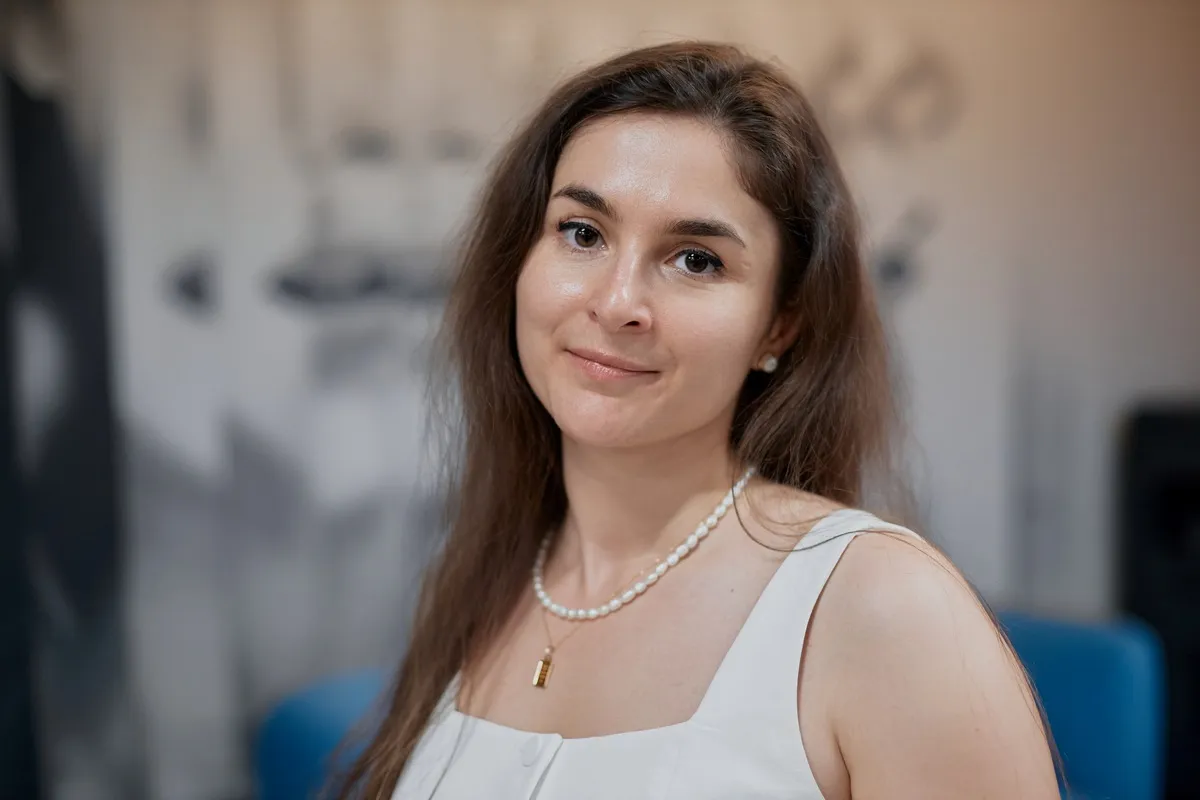
Екатерина Рехерт
Almaty-based Ekaterina Rehert studied economics, but built her career in data analytics. She worked at Microsoft and Kolesa Group, and in 2019 launched DataBoom, an online school for analysts. Today, it has students from 40 countries.
For the special joint project by Digital Business and Astana Hub, “100 Startup Stories from Central Eurasia”, Kazakh entrepreneur makes over 400 million tenge annually from IT school
“In 2019, employers were lining up to hire our graduates”
– What were you doing before launching DataBoom?
– After school, I received a scholarship to study economics at KBTU. I later worked at Mars and Procter & Gamble. After that, I was selected for an American programme for young leaders from Central Asia run by E2 Educational Services. I first worked as a Data and Business Intelligence Analyst at Wimmer Solutions, an IT consulting company that also helped find talent for Microsoft. I had to learn Power BI quickly, and I managed to get up to speed. Five months later, I was offered an analyst position at Microsoft.
For me, it was a huge leap. I didn’t come from a technical background, so at first it was intimidating. In meetings, people were using terms I didn’t understand, things like servers, APIs and stored procedures. A lot of it was completely new to me. But the support of my colleagues and the local IT community really helped. Later, I joined Oracle Cloud, but then I ran into visa issues and went back to Kazakhstan for a while. I was planning to move to Canada, and while I was sorting out the paperwork, I took a data scientist role at Kolesa Group.
At work, I was using Power BI and other data analytics tools a lot. Back then, that kind of expertise was still quite rare in Kazakhstan, so people kept asking me, “Can you show me how you do this?” or “Could you run a training session?” It took me about a year to pluck up the courage, but in June 2019 I finally launched a five-week offline course, teaching it on weekends. I had just eight students.
– How did one course grow into a full school?
– I didn’t have a business plan, or even any real intention of becoming an entrepreneur. But the demand just kept growing. In 2019, companies were snapping up our graduates. Mars, for example, was hiring junior specialists who only had Power BI skills. So I decided to keep running the courses, and that’s how DataBoom was born.

Corporate clients came to me almost straight away, including Toyota, Air Astana and Beeline. Within a year, I was already earning more from the courses than from my main job. By that time, I had married a US citizen and was preparing to move to Seattle. So before long, I left my job and started focusing fully on the business.
When the COVID-19 pandemic hit, the company grew quickly because we moved online. Instead of 20 people in an offline class, we had 50 people joining lessons on Zoom. Then I built an online platform and recorded the lessons, and that brought another big jump in growth. I think we caught the wave around online education at just the right moment, along with the strong demand for Power BI and other data analytics tools.
– Why do you think the classes became so popular?
– I was already quite visible in the industry because I was developing KZ BI Community, a data analytics network in Kazakhstan. A lot of people first heard about me in 2021, when I received the Microsoft MVP award. It’s given to experts who actively share their knowledge of Microsoft technologies, and there are only around 3,000 of them worldwide.

The courses also weren’t boring. I don’t come from a technical background, so I use a lot of strange and funny analogies when I explain things. For example, I call Power Query a “kitchen”. We bring in raw, unwashed ingredients, meaning raw data, then clean them, chop them up and turn them into different dishes, or tables, using tried-and-tested recipes. In that kitchen, the analyst is the head chef: they understand what they want to get at the end. And the AI assistant is more like a sous-chef. It can suggest a recipe, help with a formula or speed up routine steps, but the human is still in charge.

Some people even criticise me for it. I usually say, “Well, at least I made you feel something, so now you’ll remember it for the rest of your life.” And for some people, it really clicks. I think the classes became popular partly because I genuinely enjoyed teaching, and people could feel that.
I also designed the training from the start so it would prepare students for international Microsoft certification. Every student has a personal mentor certified by Microsoft, who supports them from the beginning of the course right through to the end. That helps us maintain quality and improves completion rates, which corporate clients value especially highly, since many of them have been training their employees with us for years.
As an economist, I understand that, at the end of the day, demand and supply simply met at the right moment.

“The average salary of our graduates is 514,000 tenge”
– What happened to the school after the boom in online education during the COVID-19 pandemic?
– Until 2022, we were growing really fast. Back then, one Facebook ad campaign was enough to fill a new group. Now, getting the same result takes a lot more work. Over time, people have also grown tired of endless online meetings.
The market has changed too. Knowing Power BI alone is no longer enough. Today, employers, not just large corporations but regular SMEs too, want analysts who can work with Excel, Power BI, SQL and Python. Over time, we added courses in those areas as well. At the same time, we’re not one of those IT schools that teach everything from design to development to analytics. I really believe in the phrase, “I fear not the person who has practised 10,000 kicks once, but the person who has practised one kick 10,000 times.” Our focus has always been data analytics, and it still is: Excel, Power BI, SQL, Python and the use of AI tools in data work. We have short courses for people who want to close one specific skill gap, and longer programmes for those who want to move into a new profession or grow within their company. A separate area for us is corporate training, where companies send whole teams to study with us.

– How many students do you have now, and who are they?
– On average, we have around 100 students studying at DataBoom each month. Most of them come through Instagram ads or recommendations.
Our reach is pretty broad: students come from more than 40 countries, although most are still from Kazakhstan. At the same time, legal entities account for half of our revenue, including companies like KazMinerals, Bank CenterCredit, Coca-Cola Almaty Bottlers, Halyk Bank and many others. Over the years, more than 550 companies have come to us for training.

Students who pay for the training themselves have very different stories. Some are learning a completely new profession, while others are investing in their own upskilling so they can grow within their current company.
— How much does a course cost, roughly?
— We have training options for different budgets, starting from 10,000 tenge. We also recently launched a new course, “AI for Everyone”, which costs 50,000 tenge.
Our main programmes, covering Excel, Power BI, SQL and Python, cost 200,000 tenge. Students can also buy a six-month programme that covers all the key skills at once, for around 500,000 tenge.

– What happens after graduation? Do you help students find jobs?
– Students can also book a one-hour session each week with HR specialists from our career centre, which is focused specifically on helping analysts find jobs. It’s all included in the course price. We checked the numbers, and 70% of students who attended 10 of those sessions went on to find analyst roles. Of course, not everyone comes to us with that goal. For some people, it’s less about getting a new job and more about moving up in their current company.
Recently, one of our graduates completed training with us and, with support from the career centre, first landed an internship at Tele2. Later, she came back to us, had a few more consultations, and moved into one of the Freedom Holding companies as a middle-level specialist.

– Have you calculated how much your graduates earn?
– We don’t have the full picture, but we do have data from Tech Orda, a government programme run by Astana Hub that helps train IT specialists. Through the programme, people in Kazakhstan can get funding to study at private IT schools, and their results are tracked afterwards, including whether they find jobs and how much they earn. Among students who trained with us through Tech Orda, the average salary was 398,000 tenge in 2022. For the latest 2025 cohort, it has already grown to 514,000 tenge.
– How has the rise of AI tools changed demand for data analysts? Are students worried that AI will replace them?
– We won’t be replaced by artificial intelligence. We’ll be replaced by people who learned how to use it before we did. If you keep working with old approaches and old tools, your efficiency won’t grow. And sooner or later, of course, an employer will choose the person who can do the job faster and better. But data analytics and data science themselves are still very much in demand, and in that sense they are fairly safe professions.
AI is already changing a lot, and it’s going to be everywhere. But what are these models trained on? Data. And for a model to work properly, that data has to be prepared, analysed, checked, and the right processes have to be set up around it. So who’s going to do that? Analysts, data scientists and data engineers.
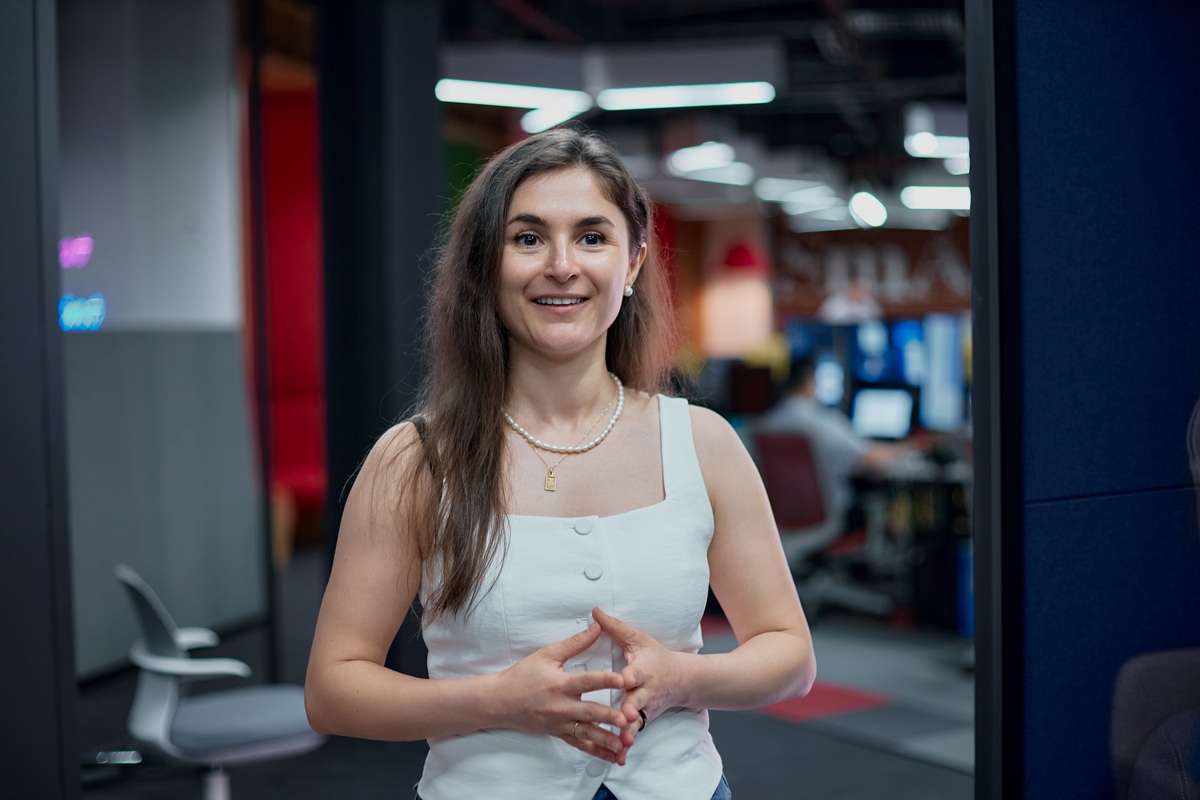

“More than 50 people from the US completed our training and went on to find jobs”
– How are you funding the project?
– At the very beginning, the costs were almost zero. I rented a room by the hour in a business centre, paid separately for the coffee break, and that was pretty much it. People came through referrals or free advertising.
The small amount of personal money I put in paid off with the very first group, and the project was profitable from day one. I kept reinvesting that profit back into the business, and that’s how we gradually grew, month by month.

For a long time, I didn’t take money out of the business as dividends. I kept it in the company instead because I wanted to build up a safety cushion, so we could operate without constantly worrying about cash flow gaps.
We’ve been part of Astana Hub since 2021, and that has also helped the business. Residents get tax benefits, which means we can put more money back into growth. But it also comes with strict reporting requirements, so we keep a very close eye on taxes, documents and all our obligations.

— How much are you earning now?
— In 2025, our revenue was 422 million tenge. In the first quarter of this year, we received around 40 million tenge from clients. But for us, that’s usually the ramp-up period. Most of our revenue normally comes in the fourth quarter.
Growth isn’t as fast now as it was in the first few years. At the same time, we haven’t raised our prices since 2023. We’re getting back to our previous numbers by launching new products. We’re also trying to work more efficiently and improve how the team operates. For example, we reduced the team from 100 people to 50.

– Did such a sharp reduction affect the team’s efficiency?
– That was our way of responding to the slowdown after the pandemic boom in online education. In 2020, I made the mistake of hiring too many people too quickly. Over time, we realised that quite a few roles and processes weren’t actually bringing much value.
The market is much calmer now, and attracting students has become harder. We realised that some processes could be simplified, automated or even removed altogether. For example, AI has completely replaced the copywriter for us. But the team’s efficiency hasn’t suffered.

– How do you manage the team?
– We all work remotely. For the past 10 years, I’ve been living between two countries, Kazakhstan and the US. Seattle is home to the headquarters of major tech companies, so I have the chance to meet some teams in person, including the team that develops Power BI.
When I’m in Almaty, I spend a lot of time with the team, meet with corporate clients, speak at events and run offline sessions.

– What challenges have you faced as an entrepreneur over these seven years?
– There were times when our service wasn’t at the level it should have been. In those cases, we always tried either to fix the situation or refund the training fee.
For me, reputation is worth more than money. I’d rather take a financial hit and fix the mistake properly than pretend nothing happened. Whether it’s clients, employees or partners, I try to treat every relationship as long-term. You never know when your paths might cross again.

There were tougher moments too. Once, for example, an employee with a high level of access took a large amount of money out of the company. We had to go to court to get it back, and in the end, we did. Someone told me at the time, “If you’ve never been to court, you’re not really an entrepreneur yet.” So I guess that was my rather unpleasant initiation.
Over these seven years, my tolerance for uncertainty has grown a lot. Business experience helped, and so did becoming a parent. When you have a child, you quickly realise that you can’t control everything or know in advance what’s going to happen, even an hour from now.

– What are the school’s plans for this year?
– At the end of the year, once I’m back in the US, I plan to focus more actively on growing DataBoom in the American market. We already have some early results: more than 50 people from the US have completed our training and were then able to find jobs or move forward in their careers.
In the US, our training is far cheaper than many local programmes, but we can still compete with them on quality. That’s why we see the American market as a very strong opportunity for us.