
Kazakh Scientist Moves to the US and Builds a Biotech Startup That’s Already Raised $3.8 Million


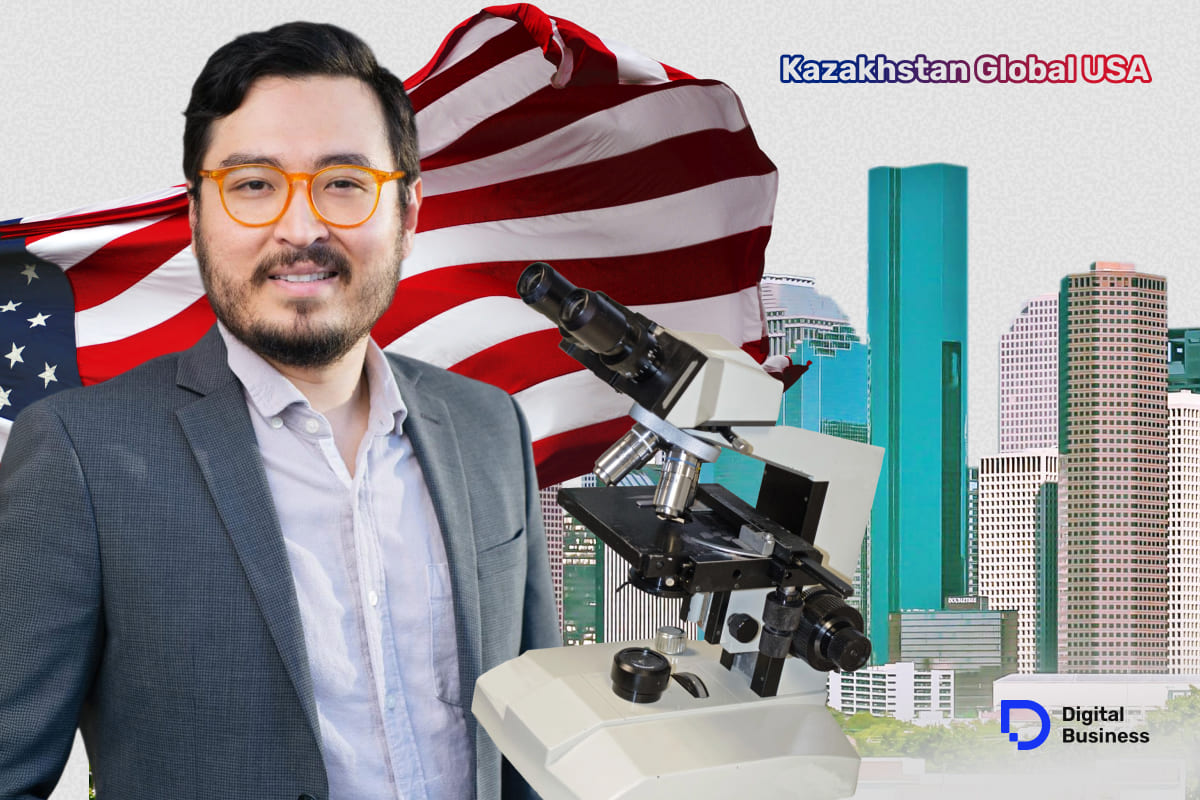
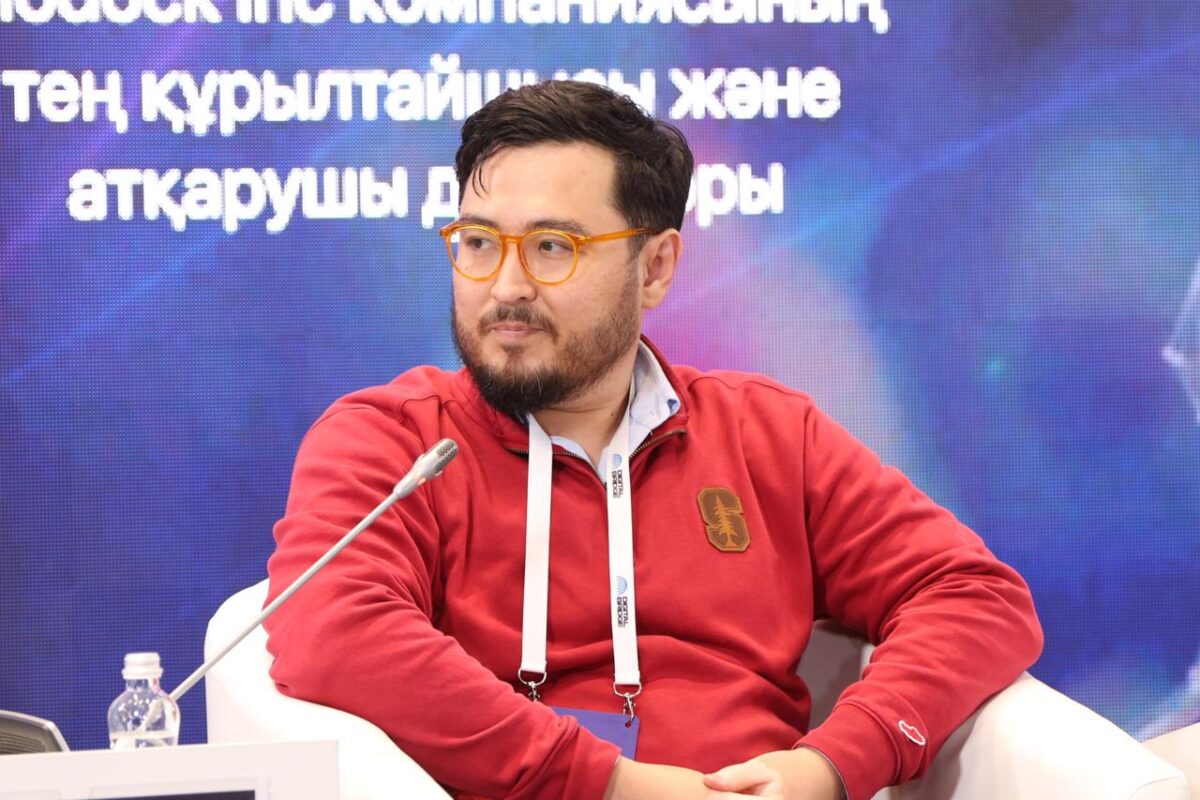
Digital Business continues its Kazakhstan Global USA series, where we explore the US tech ecosystem and the opportunities it holds for Kazakhstani startups. In a previous feature, we spoke with Aset Abdualiyev, founder of the Silkroad Innovation Hub. Today’s spotlight is on Nurlybek Mursali. Fifteen years ago, he left Kazakhstan for the US, earned a PhD from Stanford, and in 2020 co-founded a biotech startup called Biodock. The company is building an AI-powered platform that helps pharmaceutical companies decode microscopic images. So far, Biodock has already raised $3.8 million in funding.
In an exclusive interview with Digital Business, Nurlybek shares what kind of research he worked on during his PhD at Stanford, how his startup journey began, and why he eventually left his first project. We also talked about how Biodock can benefit everyday people, why the team decided to move from Silicon Valley to Texas, and what pros and cons this new location holds for early-stage founders.
«Developing a drug or medical device takes years and massive investment»
— Nurlybek, when did you first get into biotechnology?
— I went to a Kazakh-Turkish high school in Atyrau. Back in those days, I started competing in national biology olympiads and ended up winning a few medals. That’s when I really got into it and realized I wanted to pursue science.
After high school, I moved to the US and got into James Madison University in Virginia, majoring in biotechnology. I wasn’t just focused on classes.I also got involved in research: ran experiments, spoke at conferences, and wrote a bunch of papers. My efforts lead me to a PhD program at Stanford.
At Stanford, I collaborated with different engineering labs and worked on microfluidic research (a field of science and engineering that studies how fluids behave in very small volumes, like in channels and chambers ranging from a few micrometers to a few millimeters — note by Digital Business). I was also working with stem cells (cells that can self-renew and turn into various specialized cell types in the body — note by Digital Business) and developmental biology (the scientific study of the processes by which animals and plants grow and develop — note by Digital Business). My research focused on how obesity affects embryo development, and in the end, I built a device that can assess embryo quality based on their density.
I also did a lot of work on stem cell research in the field of organ transplantation. Together with my colleagues, we published a paper on growing human organs inside animals like sheep and other species. That study got picked up by several major media outlets, including The Economist.
On top of that, I launched my first startup during my very first year of the PhD program.
– What was the project about?
— It was called SmartLens. The idea was to develop a contact lens that measures intraocular pressure in patients with glaucoma. I worked on the project during my first year of the PhD, but eventually left the day-to-day operations and kept my stake in the company. Currently, it successfully raised both seed and Series A funding rounds and is now in the clinical trials phase.
– Why did you decide to leave the startup?
— Balancing a startup with PhD research is incredibly tough. At some point, I had to make a choice. Since I came to Stanford specifically to study, I decided to focus on science.
– When did the idea for Biodock come about?
– Toward the end of my PhD, in 2020, I decided to give entrepreneurship another shot. I did a lot of market research, trying to figure out what direction I wanted to take. Based on my past experience, I knew building a therapeutic or diagnostic company would take years and require massive amounts of capital. So I focused on software for pharmaceutical companies. It’s a faster path to revenue.
My co-founder and I received a grant from the US National Science Foundation (NSF). Afterwards we went through StartX for an in-residence program for Stanford Students. Eventually, we landed on the idea of using AI to speed up the analysis of microscopic images. That’s how Biodock was born.
– What’s the value of your product for pharmaceutical companies?
– Say a lab is developing a cancer drug. The researchers run experiments and generate tons of organ images, terabytes of data. Manually going through those to spot cancer cells could take months. With Biodock, it happens way faster.
We speed up the R&D side of things, which means drug development becomes faster and less expensive.
«We raised $2.2 million in just a few days»
– How did you get the project off the ground in the early days?
– Once we locked in the direction, we started building the MVP. That was in the summer of 2020. A couple of months later, we signed our first client. Around the same time, we applied to Y Combinator and got into the Winter 2021 batch. The program had a huge impact on the project. Being part of a community of founders and experts pushes you to move faster, and investors are much more open to talking when they see you’ve been through YC.
— Were you able to raise funding during the program?
— Yes, and actually, most of the round was closed in just a couple of days, even before Demo Day. The whole negotiation process took about a week. Our lead investor was Andreessen Horowitz, along with a few other major funds. We raised $2.2 million in that round.
In the end, we decided not to do Demo Day. Later on, we realized that was a mistake. It’s a great opportunity to present your project to potential future partners and build useful connections.
— What metrics did investors care about when you were pitching?
— The first thing they looked at was the founding team. Both my co-founder and I went to Stanford, which was definitely a big plus. They also dug into the tech side. We already had a working product and a few early clients, so that made it a lot easier for investors to say yes quickly.
— How much total funding has gone into Biodock so far?
— Over the five years we’ve been building the company, we’ve raised $3.8 million in total.
«Biodock is used by over 5,000 labs around the world»
— How do you monetize the product?
— We sell annual licenses to large companies. Pricing depends on the volume of data and how complex the tasks are. At the same time, we work with universities and research institutions. Currently Biodock is used by over 5,000 labs worldwide, including large pharmaceutical companies and biotech companies, mostly in the US, Europe, Southeast Asia, and Australia.
— Have you hit profitability yet?
— Biodock is a software product, so we could be profitable pretty soon. But right now, our main goal is growing the product. Everything we make goes straight back into the tech. We're building out the platform and adding new features. For example, we’re currently working with large language models.
— Since you're working with pharma companies, how long is the typical sales cycle?
— It all depends on how ready the lab is. If the researchers already have images they want to analyze, we can get started the same day. But sometimes we have to wait a few months until the client has data ready to process.
— For companies like that, data confidentiality and the accuracy of AI models are top priorities. How do you address those needs?
— We offer the highest level of security. Companies run security assessments on our processes, and we make sure their data stays completely confidential.
Each lab brings in its own data and trains the model using our proprietary architecture (a technology that’s owned by the company, not built on open-source tools — note by Digital Business). The better the researchers label their data and mark which cells are which, the more accurate the results will be.
«Texas is trying to be startup-friendly, but it's still far behind Silicon Valley»
— In 2024, you moved out of Silicon Valley and relocated the company to Texas. What led to that decision?
— The main reason was the high cost of living in Silicon Valley. On top of that, during the COVID pandemic, a lot of companies started leaving California. We decided to follow that trend and see where it would take us.
But now, I wouldn’t recommend doing the same. If you’re building a startup, it’s better to stay in the Bay Area.
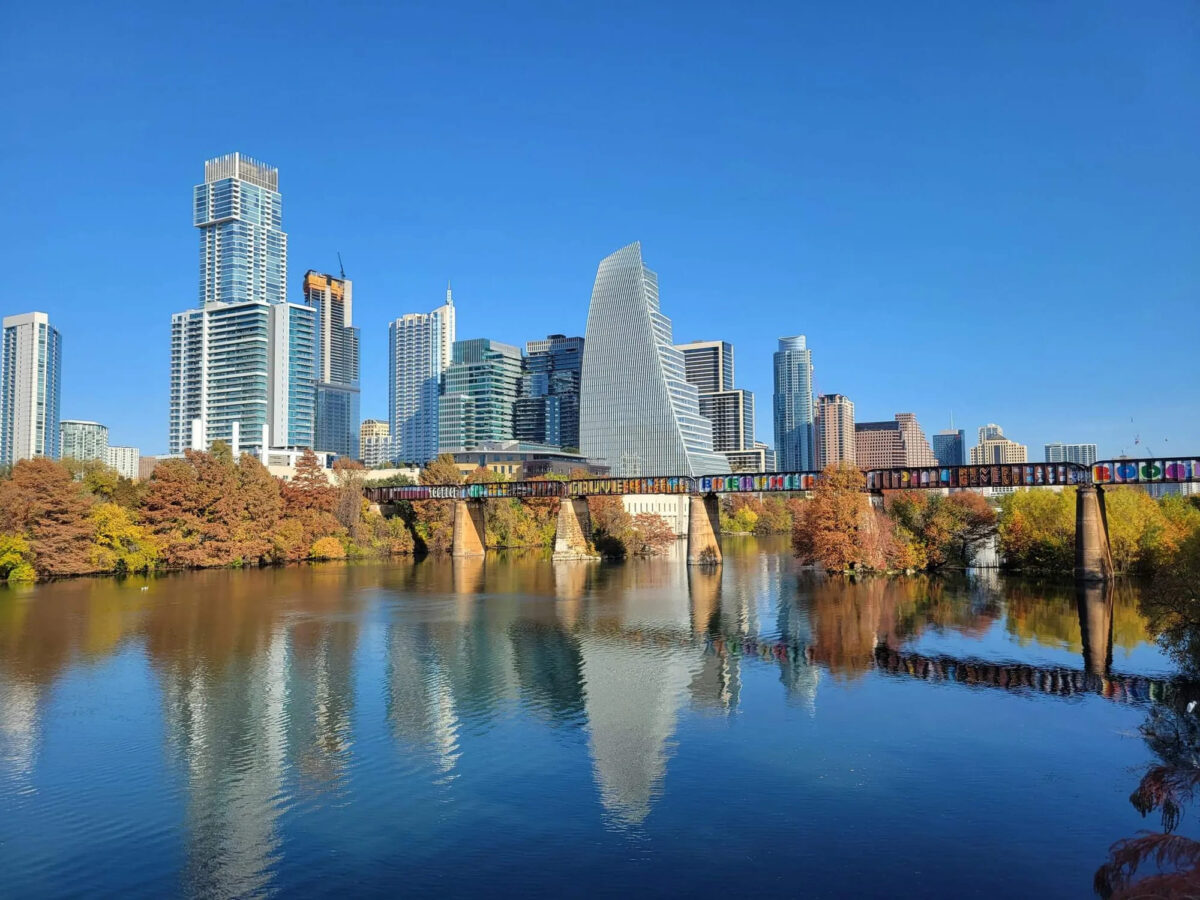
Austin, Texas
– Why?
– Silicon Valley isn’t just packed with tech giants. It’s also one of the world’s biggest biotech hubs. You’ve got pharma labs, researchers, engineers, and a big chunk of Biodock’s clients based there. Being able to visit labs in person and talk directly with the teams would make things a lot easier.
Texas, especially Austin, the state capital, is trying to be startup-friendly. But it still lags far behind Silicon Valley. The region doesn’t offer much specifically for early-stage startups. One of the biggest challenges, for example, is finding engineers who actually understand what it means to work at a startup. In Silicon Valley, there are plenty of those people. They know the environment, they know what they’re signing up for, and they’re actively looking to join young companies. In Texas, like in many other parts of the US, engineers are more focused on landing jobs at big tech firms.
– Are there any areas where Texas actually has an edge over Silicon Valley?
– It’s definitely more convenient and affordable for family life. The healthcare is good, there are lots of universities and other educational institutions, and there’s even a beach on the Gulf of Mexico. Plus, in my opinion, Texas has one of the largest Kazakh communities in the US.
«You need to solve a problem that customers are actually willing to pay for»
— What other challenges have you faced while building the startup?
— Any biotech project runs into challenges when the stock market drops or there’s an economic crisis. That stuff has a direct impact on the budgets allocated for biomedical research.
– How many people are currently working on Biodock?
– Despite the hiring challenges, we’ve managed to bring together a solid team. Right now, we have around 10 people on board, including a few from Kazakhstan. We’re actively growing the team and hiring talent from Central Asia as well.
— Where do you see Biodock in a few years?
— We’re aiming to become one of the go-to solution providers in the field of biological research. The goal is that anytime scientists have new data, they’ll go straight to Biodock and be able to analyze their data there.
— What would you say to founders from Kazakhstan who want to launch a startup in the US?
— Start by finding a customer, then build the product. It might sound counterintuitive, but that’s how it actually works.
You also need to solve a problem that customers are truly willing to pay for. One of my early mentors shared a great analogy. He said: people who buy a drill don’t actually want the tool — they want a hole in the wall. Someone who just wants to hang a picture isn’t going to care if the drill has Wi-Fi, a touchscreen, or a heating feature.
For anyone moving to the US, I always recommend learning English, sending cold emails, and using LinkedIn to find clients. If you’re solving a real problem and saving an American company money, they’ll buy your product, no matter where you’re from.