
Uzbek Founders Raise $500,000 for an AI-Powered Service for US Freight Carriers



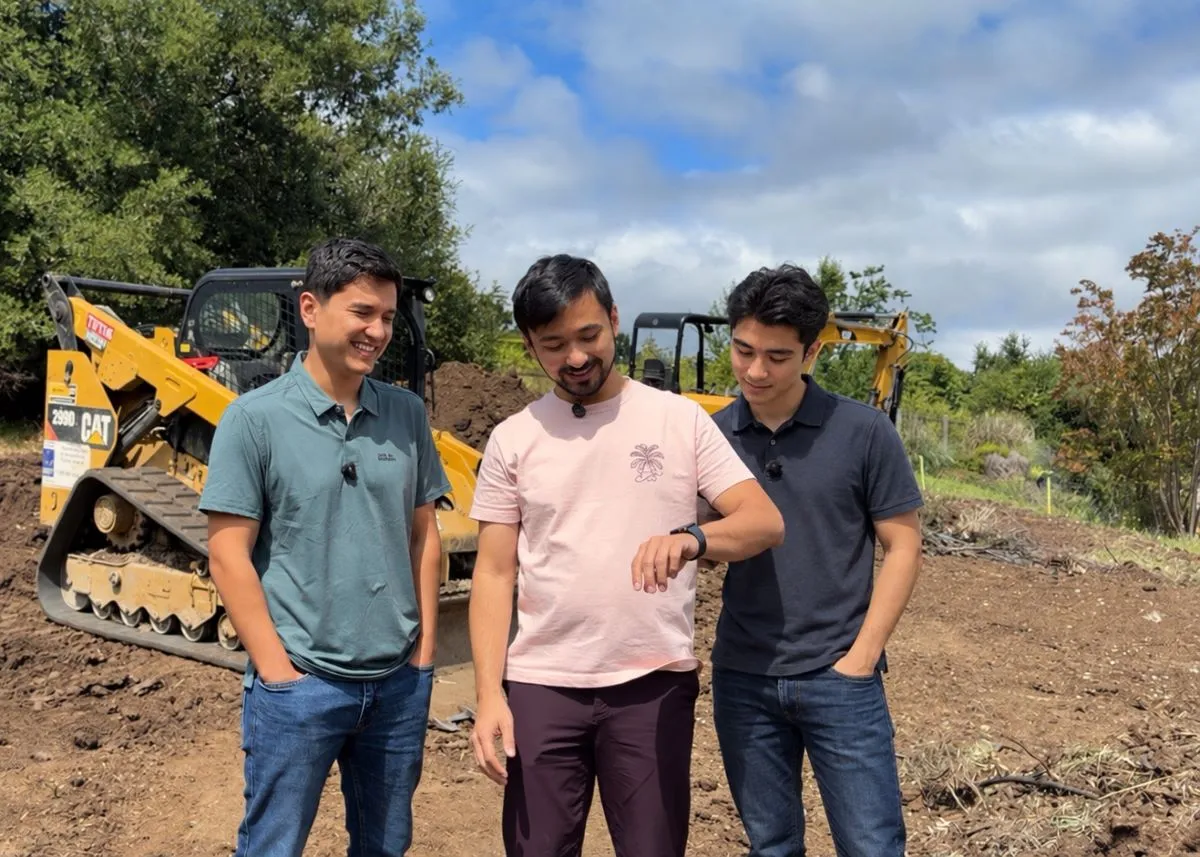
Команда Fleetmule
Asror Arabjanov moved to the US in 2021 to study law at Stanford Law School. He later launched the AI startup Fleetmule. The project handles driver, document, and permit checks for US freight companies. Today, the service manages more than 3,000 trucks.
For the joint Digital Business and Astana Hub project “100 Startup Stories from Central Eurasia”, Asror shared how his service shifted the work of freight safety specialists to AI, why Fleetmule keeps its pricing private, and which processes should never be left entirely to neural networks.
“I believed in the power of private capital to create”
– Tell us a bit about yourself. What were you doing before launching the startup?
– I’m from Kurgantepa, a small town in Uzbekistan. I grew up in a farming family, and my father trained as an animal husbandry specialist. My childhood was filled with the kind of work that was normal for kids growing up in the countryside: milking cows, clearing out manure, and preparing feed for the livestock. But from my very first year at school, I was drawn to English, so I joined extra classes and also studied on my own.
I went on to study commercial law at Westminster International University in Tashkent. Later, I worked at international law firms, including GRATA International.
– How did you make the move from law into business?
– I was working as a corporate lawyer for a holding group when the company decided to build the Chortoq mineral water plant. I was appointed CEO of the project. Later, I joined Khantex Group, a cotton and textile cluster, as one of its managing partners. In 2016, the government set a clear goal to eliminate child labour from the cotton fields because it was damaging the country’s image abroad. We brought in John Deere harvesters and built a modern cotton processing plant. Kurgantepa district became the first in Uzbekistan to fully mechanize the process and eradicate forced child labour.

Asror Arabjanov
For me, it was a personal mission. My mother worked as a teacher her whole life, and when I was at school, I spent every autumn picking cotton in the fields alongside her and my classmates.
The project also made me believe in the transformative power of private capital. I’m convinced that, in the right hands, business can drive more systemic change than thousands of non-profits and NGOs.

A few years later, I felt I had reached the limit of what I could do locally and wanted to try something completely different. I applied to leading universities in the US and the UK and ultimately chose Stanford Law School.
“I wanted to be closer to Silicon Valley’s tech startup scene”
– How did you first get into startups?
– I noticed that many people from Central Asia in the US work in logistics and trucking. While we were law students, some friends and I advised a few freight carriers we knew. That gave us a closer look at how their businesses operated, and we saw just how much chaos there was in their back offices.
In 2021–2022, that experience led Shohrukh Rakhmanov, Mamur Kodirov and me to create Datatruck, an ERP and TMS platform for the US trucking market. Today, Datatruck has raised more than $12 million in investment, completed its Series A round and works with more than 1,000 logistics companies.
At the time, I was still working at a law firm, so I couldn’t fully commit to growing Datatruck. Eventually, I stepped away from the day-to-day operations and reduced my stake in the company.

Still, I wanted to stay close to the tech startup world. For example, together with colleagues from a law firm specializing in venture capital law, I worked on ElevenLabs’ first investment round. I also co-founded Silkroad Innovation Hub with my Stanford roommate, Asset Abdualiyev. The idea was to help entrepreneurs from Central Eurasia establish themselves in Silicon Valley with relocation, integration, mentoring and introductions to investors.
Today, Silkroad Innovation Hub has grown into a respected community, with prominent tech leaders such as OpenAI’s Sam Altman and Y Combinator’s Garry Tan attending its events.
– What made you decide to launch your own startup again after that?
– Last year, I realized that while I was still young and had the energy, I wanted to focus on one ambitious challenge and build a technology company. My partners and I launched a new project. At first, we planned to create a LegalTech product, an AI email assistant that could review contracts like a lawyer.
But at the beginning of this year, we pivoted and shifted our focus to safety and regulatory compliance in the US trucking industry. That became Fleetmule.
– Why did you return to the trucking industry?
– The US trucking industry is heavily regulated because of strict safety requirements. If a carrier has documentation issues or violations, they are recorded in the federal system and affect the company’s safety rating. At a certain point, the business can lose its authority to transport freight.
At the same time, 95% of carriers are small companies with fleets of fewer than 10 trucks. They face almost the same requirements as large operators, but they cannot afford to keep in-house lawyers and compliance specialists. That was the gap we decided to focus on.

“AI shouldn’t be given complete freedom”
– How does Fleetmule work?
– Our platform automates the work of the person responsible for safety and regulatory compliance. We start by signing a contract and setting up the system in the channels the client already uses, such as email, Telegram, WhatsApp and Slack.
Then, when a new driver joins the company, our agent automatically contacts them via messenger or SMS, collects their personal information, downloads their driving history report and runs checks against criminal databases and anti-terrorism watchlists.

To verify the driver’s experience, our agent finds contact details for several previous employers and asks them to confirm the driver’s work history and any accidents. Fleetmule then arranges the medical checks. It asks the driver in the chat where along their route it would be convenient to get tested, finds a certified lab nearby and books the appointment. As a result, onboarding that used to take two or three days can now be completed in just a few minutes.
The system works in much the same way when a company buys a new truck. The agent collects the vehicle details, obtains the necessary road permits within a couple of hours and registers the truck in several states.
We also integrate Fleetmule with the company’s phone system. The AI listens to call recordings and takes the necessary follow-up actions, such as sending a form, notifying the insurance company or adding a task to the calendar.
The fleet manager can see all these processes on a dashboard and ask the agent management questions such as “Which drivers received the most fines this month?” or “Which licences expire next week?”
– Is the analytics available to the business owner as well?
– Fleetmule tracks the company’s penalty points in the federal system and compares its performance with data from around 4 million US carriers. Based on this, the platform assesses potential risks in advance. For example, it can warn that unless certain violations are addressed, the company’s rating may fall below a critical threshold and put its licence at risk.

– Why haven’t existing services been able to fully automate this work?
– The industry relies heavily on unstructured data, including recordings of conversations with drivers, lengthy legal contracts, driving history reports, drug test certificates and calls to government agencies. Traditional software works well with predefined fields and workflows, but it cannot interpret the content of these documents and conversations on its own.
US government agencies in the transportation sector are also quite old-fashioned. In some states, documents still have to be sent by fax, while certain issues can only be resolved over the phone.
With the arrival of LLMs, it became possible to automatically analyze texts and conversations, extract necessary information and determine what action to take next.
– Can AI really be trusted with safety checks? What if the model simply makes up that it has verified a driver?
– There are some critical tasks, such as submitting registration documents, ordering tests and renewing permits. We can’t give AI complete freedom here because that could lead to hallucinations. So we digitized around 50 tightly defined industry workflows. The AI only decides which function to call, while the platform handles everything else programmatically, which significantly reduces the risk of errors.

Analytical tasks are different. Finding violations, reviewing logs and preparing summaries are hard to automate without AI because they rely on unstructured data. For this kind of work, we use internal AI validation tools together with human oversight.
In more complex cases, our team takes over the calls and correspondence. Our operations centre is based in the Philippines, where we currently have four full-time operators. But our long-term goal is to gradually automate these edge cases as well, so that within one or two years we can remove the human element from the compliance process entirely.
– What happens if the AI makes a mistake?
– Unlike agencies that rely on remote staff and can simply shut down and disappear, Fleetmule remains accountable to the client for the consequences. We carry professional liability insurance of up to $1 million per claim.
“At an early stage, a startup needs to keep a low profile”
– How did you find your first clients?
– The US logistics industry is a very closed circle, where business relationships are built entirely on trust. No one is going to hire a compliance officer because they saw a banner ad online.
I found our first client through a Telegram group for trucking company owners. I read through their discussions about recurring audit problems, then messaged one of the members directly and offered to take the whole headache off their hands.
Today, our own free carrier verification tool, Searchmule.io, has become a source of organic customer acquisition. Trucking company owners use the platform to check carriers or brokers, review their violation history and safety records, and assess how reliable they are to work with.
Searchmule.io now handles more than 15,000 searches a day, and the portal has already been used by 400,000–500,000 unique carriers. We use this data to find potential Fleetmule clients. We identify companies that are having problems, call them and offer our product.

– How many clients do you have now, and why does using Fleetmule make sense for them?
– I can’t share the exact number just yet, but our platform already manages more than 3,000 trucks in total.
As for the cost, hiring an in-house safety specialist typically costs a business $80,000–$120,000 a year. Fleetmule costs three to four times less.
For larger carriers with an in-house safety team, our system can multiply productivity. One specialist using Fleetmule can easily handle the workload of five people.
Fleetmule is priced roughly in line with outsourced agencies.
– How much revenue is the startup generating?
– At this stage, I deliberately don’t disclose our revenue figures or average deal size publicly. We also don’t publish a price list on our website because Fleetmule isn’t something you can simply buy with the click of a button like an off-the-shelf app. We first audit the client’s fleet, make sure our solution is a good fit, and only then prepare a tailored offer. Until we build a client base of 500–1,000 companies, our pricing will remain flexible and experimental.
If we start talking publicly about our revenue and growth rates, we’ll attract unnecessary capital into the niche and create new competitors for ourselves. I believe that at an early stage, a startup is better off keeping a low profile.
“We need to capture the market quickly and become the default solution for the industry”
– How much have you invested in the project so far?
– We raised $500,000 at the pre-seed stage. The round included institutional investors such as Astana Hub Ventures, IT Park Ventures, Silkroad Angels, as well as Silkroad Innovation Hub, which became our first investor while we were still at the idea stage. For us, what matters is not only the investment itself but also their resources, network and access to companies.
For example, Astana Hub Ventures, the venture fund of Astana Hub, continues to support us even after the deal: they invite us to events, give us opportunities to participate and talk about the product. To me, this reflects the idea promoted by Silkroad Innovation Hub: small and large communities that are closely connected should support one another.
Some of our first clients also became angel investors. After using the product, these transportation company owners offered to invest $20,000–$50,000 themselves.
– Are you planning to raise more funding?
– We’re preparing for our next funding round now. We need to move quickly, capture the market and become the default solution for the industry. Otherwise, competitors with more capital could get ahead of us by investing more aggressively in growth.
We need the investment to hire top AI engineers, scale our direct sales team and bring everyone into one office. I believe breakthrough startups are built when the core team sits in the same room and constantly exchanges ideas.
– Who else is working on the project with you?
– There are three of us on the founding team. Akbar Karimov, a close friend of mine for more than 16 years, has lived in the US for many years and has worked across several areas of the trucking industry. He has been a broker, owned his own transportation company and spent several years leading the Safety & Compliance department at a large fleet. He understands the industry’s pain points in depth and was the main architect of the product concept.

Akbar Karimov
Ruzimboy Bekjanov is also part of the team. He’s a highly skilled full-stack engineer with a strong grasp of modern AI models and automation tools.
We don’t have any full-time product managers. Akbar and I either speak to clients ourselves or bring our developers into the conversation. I think it’s incredibly important for engineers to hear the client’s problem directly and then be able to turn that into code themselves, without anyone in between.
That lets us release new features incredibly fast. If a client asks for something, we don’t spend months writing technical specifications. We can have a working prototype ready in two or three days.

Ruzimboy Bekjanov
There are six people in the company, including the founders. We also work with four call centre operators based in the Philippines.
– Given that Fleetmule is built around US regulatory requirements, are you planning to expand into other countries?
– Not for now. Markets such as China, India and Central Asia work very differently, and trying to expand across several regions at once would take an early-stage startup away from its core focus.
But the US market is enormous. In 2026, the freight and logistics market is estimated at around $1.43 trillion. We only need to capture a relatively small share of it to build a multibillion-dollar business.

At the same time, we see huge potential to expand into other heavily regulated industries in the US, including construction, passenger transportation and aviation. Our strategic goal is to use autonomous AI agents to take over the routine back-office work of companies across different sectors.