
Kazakh Entrepreneur Raises $2.3M for an AI Agent Designed to Create and Manage Online Stores



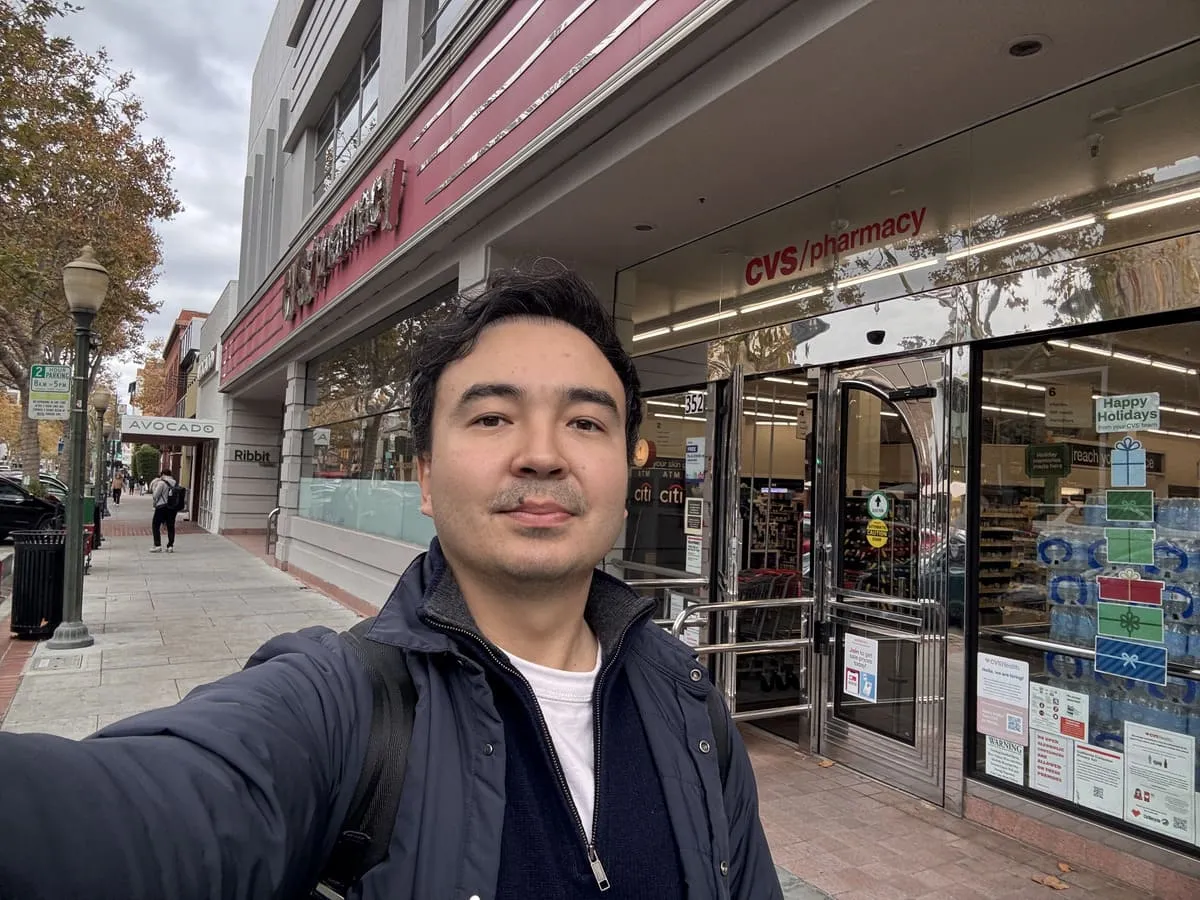
Alim Uderbekov launched the AI startup Surfaice in the US. It initially focused on using AI to build stores and restaurants, before expanding into lease management and day-to-day property operations. In 2024, the startup raised $1.5 million, followed by another $800,000. Today, the company’s AI agent is used to manage more than 3,000 retail locations and support the construction of 270 stores.
As part of its joint “100 Startup Stories from Central Eurasia” project with Astana Hub, Digital Business spoke with Alim about how Surfaice managed to win major US companies paying up to $150,000 a year, and why having local specialists proved critical to selling in the US. He also explained why he believes it is important to raise funding from Central Asian investors even after attracting international investors.
“Project delivery is now 30% faster”
– Alim, what were you doing before you launched Surfaice?
– I graduated from the Republican School of Physics and Mathematics in Almaty, then studied Modeling and Control of Space Systems at Bauman Moscow State Technical University. After working in the field for two years, I moved into consulting and later joined Yandex’s entrepreneurship school. I was looking for an idea for my own project and eventually launched GdeMaterial, a marketplace for construction materials that operated successfully in Kazakhstan and Russia. In 2022, I moved to Vietnam and later to the US, where I started exploring the startup ecosystem through Hero Training, a joint accelerator program run by Astana Hub and Draper University.
– How did you come up with the idea for your current startup?
– I originally came to the US with a different project: a platform for investing in early-stage construction projects. At the time, I thought it had real potential to shake things up. But investors in Silicon Valley helped me see it differently. They told me: “This isn’t a startup, it’s just a business. There’s nothing disruptive enough about it.”
I stopped pitching the old product and started meeting with VC funds instead. I would tell them about my background and ask what they were investing in. Almost everyone said AI. That made me realize I needed to figure out how artificial intelligence could change the construction industry. I grew up in a family of civil engineers, so I had seen from an early age just how chaotic construction processes could be. And I wanted to change that.
I started building an AI agent that could take over part of the work involved in preparing and launching new locations. It helps find suitable sites, gather data, calculate budgets and timelines, find contractors, and track how tasks are being completed. I decided to focus on standardized locations such as McDonald’s restaurants, where many of the processes are repetitive and follow a familiar playbook. Over time, we expanded the product and added more capabilities.
Today, our AI agent Hugo has more than 150 skills across several areas.

– What can the agent do?
– One of the main areas is managing a retail location throughout its lifecycle. The agent can review a lease agreement, pull out the key terms, create a schedule of required payments, track whether they are made on time, and so on. Hugo can also prepare documents for the tax authorities, reconcile invoices, and flag any discrepancies.
It can also handle some of the tasks involved in managing a location. For example, it can determine who is responsible for repairing an air conditioner and find the right contractor for the job.
Hugo also helps with opening new locations. The agent can find a suitable site, review the lease, put together a renovation budget, find contractors, compare their proposals, and monitor the work. In other words, a client can hand over the entire management of their stores to Hugo.

– What results have clients seen since they started using Hugo?
– For one of our clients, we trained the agent to carry out tax audits. The same task now takes 2.5 minutes instead of 40.
For another client, we built a tool that combines site inspections with our AI agent. A person walks around the site with a tablet and simply says things like, “The door hasn’t been installed properly,” “There’s a chip in the window,” or “The entrance area is dirty.” The agent listens and creates a list of issues. Hugo also guides the inspection, reminding the person which areas still need to be checked. It then generates a report and assigns each task to the right contractor: a broken tap goes to the plumber, dirty windows to the cleaning team, and so on. As a result, project delivery became 30% faster. The agent also freed up 20 hours a week for employees that had previously been spent on routine tasks.
“We sign contracts worth $120,000–$150,000 a year with large companies”
– Who are your main clients?
– Most of our clients are well-established national brands that have been around for years: supermarkets, restaurants, home improvement stores, and Pilates studios. We focus on large US companies with extensive networks of locations. Right now, we have 10 long-term contracts, and Hugo is used across more than 3,000 retail locations.
At the moment, we work exclusively in the US. We’ve completely exited the Kazakhstan market. We stopped working with some clients, while others were handed over to other companies to manage.

– Why did you decide to do that?
– Kazakhstan and the US are very different markets, and it started to feel like we were building two separate startups. We didn’t want to spread ourselves too thin, so we decided to focus on the US.
– How much revenue are you generating?
– For smaller clients, contracts are typically worth $50,000–$60,000 a year. With larger companies, we usually sign deals worth around $120,000–$150,000 annually.
– How did you manage to land major clients?
– I spent a lot of time talking to potential clients at industry events and conferences. At first, I felt like an outsider. I didn’t always get the jokes or the culture, and sometimes struggled to keep the conversation going. There were moments when I caught myself thinking, “What am I even doing here?” But then I would remember where I started. I was born in Taraz, grew up as a regular neighborhood kid, and now I was out there pitching my product in Silicon Valley. That helped me stop taking every meeting so seriously. I started treating the whole process more like a game: could I actually break through and win these clients or not?
If I had to boil everything I’ve learned down to two things, it would be this. First, you need a genuine desire to help. Even if you’re entering an industry you don’t know well, if you truly want to solve the client’s problem, you have a real chance of succeeding. The second is reputation and choosing the right partners. For example, I recently brought on an American co-founder, Joe Valeri.
He had previously built and successfully sold a startup focused on real estate management in the retail sector. Joe initially agreed to come on as an advisor, but once he got more involved in the project, he wanted to become a full partner. Several other US-based sales professionals with industry expertise also joined Surfaice. Bringing them on helped us move faster.

– Why is it so important to hire local experts?
– Real estate and construction are basically an “old boys’ club.” We work with large, long-established companies. Some have 10,000–12,000 employees, and their executives may stay in the same roles for decades. It’s a very conservative industry, and breaking into it as a new player is difficult from the outset.
Local experts help us build trust much faster. Potential clients are more willing to engage with them, and the conversations tend to be more open. But even if a company likes the product and wants to work with us, signing a contract can still take 12–18 months.
To build trust in the market, I co-authored a book with one of our clients called “A Guide to Using AI in Retail Development” and now give copies to potential clients. In it, I explain how AI can be used to improve processes in real estate, store lifecycle management, leasing, and construction. It’s a format that really resonates with more traditional industry professionals.

– Do you often face resistance when introducing the product?
– We’ve heard comments like, “Your agent is complete nonsense. I’m not going to sit there talking to a computer,” more than once. People in conservative industries tend to be less open to change. They’re generally not as flexible in their thinking as, say, software developers.
Our tools aren’t used by IT teams or marketers. They’re used by people who have spent years handling contracts manually, working with contractors, and opening new stores. Many of them had barely used AI before. So our job isn’t just to show them what the product can do. We also need to help them change the way they think about AI.
“Taking investment from a Central Asian fund is one way to support your own ecosystem”
– The US-based specialists help with sales. Who else is on the team?
– We currently have 12 people on the team, more than half of whom are from Kazakhstan. They focus on product development.
Over the past year, we cut the team in half. We shut down the Kazakhstan side of the business, and AI also took over some of the tasks. That helped us reduce team costs. We need to stay efficient and show strong results, including when it comes to raising our next round of investment.
– How much funding has Surfaice raised in total?
– In 2024, we raised $1.5 million from Sturgeon Capital, Shadow Ventures, iSeedVC, Big Sky Capital, Plug and Play, and MOST Ventures.
We’re now preparing for a new round, but last year we also raised another $800,000, including a $100,000 check from Astana Hub Ventures.

– Why did you decide to take investment from Astana Hub Ventures when you could raise money from international funds?
– Taking investment from a Central Asian fund is one way to support your own ecosystem. After all, having a successful startup in its portfolio makes the fund itself more valuable. International investors will, of course, ask where that money came from. But you can always say, “These are my friends from Kazakhstan who backed me.”
I often hear about Kazakh founders who already have major international funds in their cap table and don’t want to take money from local VCs. I see it differently.
If you come to Silicon Valley and manage to raise money from strong investors, Kazakh funds will usually be happy to join the round. Let them. That’s how we help our own market grow. Kazakh investors need successful cases where they can make a return. The MA7 and Higgsfield story, for example, showed that investing in startups can generate multiple returns. The more success stories like this we have, the more money local funds will be willing to invest in the next generation of startups.

– What’s next for Surfaice?
– We’re starting to work with construction companies that build new stores. Hugo helps them price incoming projects, find subcontractors, define the scope of work, handle contracts with vendors, build project schedules, and keep track of day-to-day progress. We’ve also started getting interest from other industries, including residential developers.
We plan to keep growing the number of locations where our agent is used. Our focus is on large corporations that are expanding aggressively. That makes much more sense for us than signing lots of contracts with smaller companies.
As for functionality, the ultimate goal is for Hugo to be able to open and manage new locations entirely on its own, without any involvement from the owner. You would simply tell it, “Open a new store on Kirov Street in Taraz,” and add it to the system. Hugo would take care of everything else.