
Kazakh Entrepreneurs Launch AI‑Powered English‑Learning App That’s Hit 300,000+ Downloads


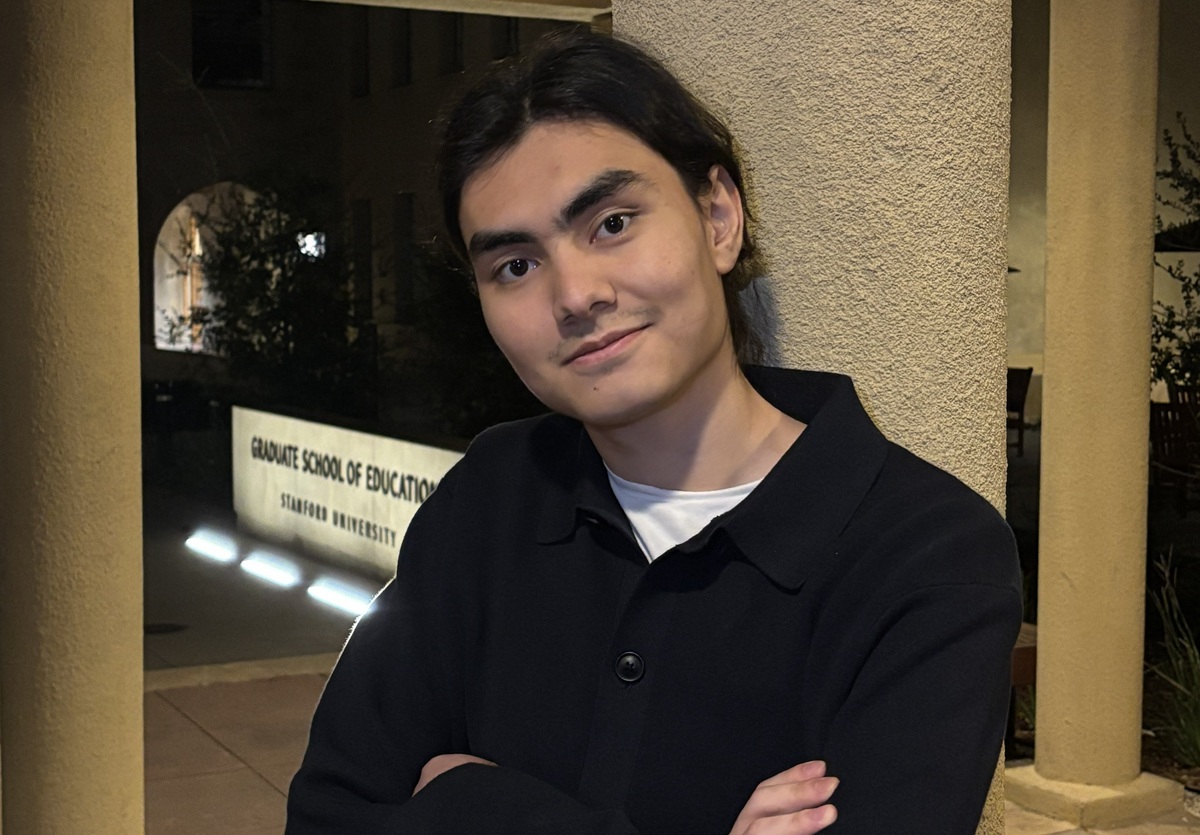
Alidar Kuchukov is 21. Originally from Almaty, he’s been living in the USA for the past eight years. He became an entrepreneur back in high school and has already launched several projects. Together with Asylzhan Altai, he built an online school called GetEnglish, which has helped over 4,000 students from 35 countries. In the spring of 2025, the two decided to create something new — an AI-powered language learning app called Aleem. Just 24 hours after launch, the app shot past Duolingo and hit the overall top of the App Store in Kazakhstan, Kyrgyzstan, and Tajikistan. In the first two weeks, Aleem gained 250,000 users.
As part of the joint project «100 Startup Stories of Central Asia» by Digital Business and Astana Hub, Alidar shared how the idea for Aleem came about, why the platform took off so quickly, and where the young co-founders are looking for funding. We also talked about the app’s monetization plans and the personality behind its mascot – a cat named Aleem.
«Started my first startup at 17 and raised $150,000»
– What were you working on before launching Aleem?
– I’ve been living in the USA for the past eight years. I didn’t finish high school — I left after 10th grade. Since 2019, I’ve been diving into entrepreneurship, trying out different online and offline projects. I explored a few areas, even got into Web3 for a bit. I just wanted to get real-world experience in things like operations, business development, and marketing. I also gave coding a shot, took some C++ and frontend courses. I can put together an MVP if I need to, but I figured out that full-time coding just isn’t for me.
At 17, I launched my first project. The idea was to use blockchain and NFTs to make charity fully transparent, so every donation could be tracked. We raised $150,000 from angel investors. That was my first real experience building a startup.
– How did the idea to create a language learning app come about?
– Back in 2023, Asylzhan and I launched a project together called GetEnglish, an English learning course. came on board as the CEO, focusing on operations and business development. We took the company to a solid level, and then decided he would continue growing the project on his own while I moved on to explore other areas.

Later, GetEnglish grew into one of the largest self-paced English learning schools in Central Asia, with over 4,000 students from 35 countries. A year later, when Asylzhan moved to Boston, we met up again in the USA and started thinking about what we could build next.
That’s how the idea for Aleem, a language learning app, came about.
– What made it stand out?
– We knew right away we didn’t want to build just another «learn words with flashcards» kind of app. What makes Aleem different is that it offers fully personalized learning. We decided to use AI to tailor the course to each person’s interests, language level, favorite topics, and even their communication style.
– What did you start with?
– In the summer of 2025, we decided to test our initial ideas. We launched an MVP — a mini app on Telegram. In just a month, we gained 40,000 users and made $10,000 in pre-sales. That’s when we realized the product was really catching on. Once we saw the hypothesis was working, we committed to building a full mobile app. By September, we were working on the project pretty much full time.

There was a moment when we thought about continuing to refine the prototype and delaying the launch. But in the end, we decided it was time. We had to release the product and test it with real users. Honestly, right now the app only has about 1% of what we originally planned.
It's still pretty raw, but that’s how it usually is in the beginning.
«About 40 to 50 thousand people open the app every day»
– What happened after the launch?
– The first week was a total rollercoaster. We had three possible scenarios in mind — best case, average, and worst case. But to our surprise, the most optimistic one played out in just the first few days. Instead of getting 100,000 installs by the end of the month, we hit that number in just two days. By day three, we were already at 150,000.
The whole team was running on 3–4 hours of sleep. It was exhausting both physically and mentally. We were fixing bugs, handling support, making quick updates, and talking to the media all at the same time. What really caught us off guard was the massive support we got from
Kazakhs around the world. Sure, we were fairly criticized for not including the Kazakh language at launch, but the positive feedback outweighed the negative by far. And by the way, we’ve already added Kazakh to the app. We just didn’t have enough resources to include it earlier. The team is still pretty small, and we’re not backed by investors yet.
– How many users do you have now?

– Over 300,000. Around 40,000 to 50,000 people open the app every day. We didn’t launch the Android version because we knew we wouldn’t be able to handle that kind of traffic. I think if we had, we’d already have over a million users.
In terms of metrics, our retention rate — how many users come back to Aleem — is already twice the market average in the early days. And that’s without any retention tools at all. We haven’t added notifications, gamification, or anything like that yet. Just didn’t have time. So I’m confident that once we roll out proper retention features, we’ll at least maintain these numbers, and most likely improve them.
– What do you think made it take off so fast?
– The feedback we hear most often is the same. People say learning languages with Aleem is just super convenient. You’ve got everything in one place: speaking practice, writing, drilling exercises to lock things in, and flashcards. So there’s no need to bounce between different apps like Anki or Quizlet for flashcards, Duolingo for drills, and something else entirely for conversation.
«We want to make language learning feel like a natural part of everyday life»
– At one point, your app overtook Duolingo in the App Store rankings, and people often compare Aleem to it. What sets you apart?
– We’re always honest about it. Duolingo is the best platform out there for beginners. They’ve really nailed the early stages of language learning. But most users hit a ceiling around the B1 level. That’s when you can get your point across, but still lack the confidence and practice to speak fluently. And that’s the gap Aleem is here to fill. Our goal is to help people move from A2/B1 to an advanced level, where they can truly speak the language with confidence.
We’ve got two main things that set us apart: personalization for every user and smart AI models that adapt the learning process based on each person’s progress and context. Under the hood, we’re using Gemini, GPT, and a few other models that aren’t as well known to the general public. We even tested Grok from Elon Musk’s X. We’re always keeping an eye on which model performs best and can switch things up whenever it makes sense.
– How does personalization help with language learning?
– When signing up, people choose their interests. Two different users will have completely different learning tracks. You respond in your own way, and the system guides you down one path. Your friend answers differently, so they’ll get a completely different set of exercises.
The biggest problem with language learning is that people just don’t have time for it. It feels boring, hard, and expensive. You end up learning things you never actually use, and it’s tough for your brain to stay motivated when there’s no immediate payoff. What we want to do is make language learning blend naturally into everyday life. Watching YouTube, Netflix, TikTok, reading the news or books — all of that should become part of the learning process.
You watch a video, and we know which one. Let’s talk about it or leave a quick comment. You finish a book, and we’ll help you write a short review. You chat with someone online, and we’ll give you detailed feedback on where your vocabulary needs work or what grammar slipped up. Then we’ll turn those weak spots into flashcards or practice tasks right away.
– What about privacy? Users might be hesitant to share everything with an outside platform.
– We'll stick to the strictest privacy and security standards, including European, American, and all other required levels of protection. The truth is, most users are already sharing this kind of data with platforms like Google, YouTube, social media, and ChatGPT. The difference is, those platforms turn your time into endless scrolling. We turn it into actual learning. At the same time, we’ll make sure users stay in control.
For example, you’ll be able to create a separate YouTube playlist just for learning English and share only that, instead of your full watch history.

– Will your mascot — the cat — have a personality? Kind of like Duolingo’s owl, which is known for being a little toxic.
– We're already working on that. In fact, we want the cat character to adapt to different personality types. Some people respond better to tough motivation, others prefer gentle encouragement. So along with figuring out a user’s language level, we’ll also try to identify their personality type.
«We want to be seen as a Silicon Valley–level startup»
– How much of your own money did you invest?
–We haven’t really made any big investments yet. Most of the major expenses haven’t even been about development, but just day-to-day living in the USA. It’s insanely expensive, especially when you’re just getting a startup off the ground. Everyone on the team had their own sources of income. I had mine from previous projects, Asylzhan had GetEnglish, and the other guys had their own gigs too.

For example, our CTO is studying at NYU (New York University — note by Digital Business) on a full scholarship that covers housing, meals, and even provides a monthly stipend. Our COO owns one of the biggest SAT and IELTS prep schools in Kazakhstan, which brings in around $47,000 a month. So we’re all in a good place financially and totally fine working without salaries for a while.
If any urgent expenses came up, we just covered them ourselves. A simple example: when we took part in the four-month AlchemistX accelerator program in Silicon Valley (run with support from Astana Hub and IT Park Uzbekistan — note by Digital Business), each of us ended up spending around $5,000 just on housing.
– Are you planning to raise investment?
– Right now, we're in talks with both local investors in the USA and folks from the post-Soviet region.

It’s really important for us to get backing from US funds. There’s more capital here, better terms, and it would allow us to grow the product faster, improve its quality, and scale more quickly. We want to be seen as a Silicon Valley startup, not just a project limited to Kazakhstan or the post-Soviet region.
– To break into the US market, you need a product that Americans will actually use. What’s your plan?
– We’re planning to add Spanish and localize the app for Spanish-speaking users. It’s a huge market — there are millions of immigrants in the USA who don’t speak English.
We already made it into the top 50 in the Education category on the US App Store with just around 10,000 American users, most of them Russian-speaking. And in New York alone, there are over a million Russian speakers. About half of them don’t speak English.The same goes for Chinese, Arabic, and Indian communities. These are massive audiences that would gladly use a product like ours.
– The app is currently free. What monetization methods are you planning to implement?
– Technically, we could launch a subscription model tomorrow or start running ads. Companies are already reaching out to place them. But we get that if we want to seriously compete on a global level and aim for the number one spot, basically to take on Duolingo, we need to do things differently. If we put up a paywall right now, users won’t like it and we’ll see a huge drop-off.

If local funds, investors, and angels from Central Asia back us, we’ll be able to stay completely free until we capture the market. After that, we’ll roll out monetization, starting with something like subscriptions.
But even at the seed or Series A stage, we’ll be able to launch a B2B direction. Corporate training and team education bring in solid revenue and could become one of our first steady income streams.
– What are you focusing on over the next year?
– Blitzscaling into the post-Soviet market. Our goal is to reach 10 to 15 million users, and also expand into Western countries, especially the USA.

We’re aiming to raise a successful seed round within a year. That would let us speed up growth, expand the team, launch new languages, and take the product to a global level.