
Left the Comfort of a 9-to-5 to Build a Startup That Helps Business Owners Earn More



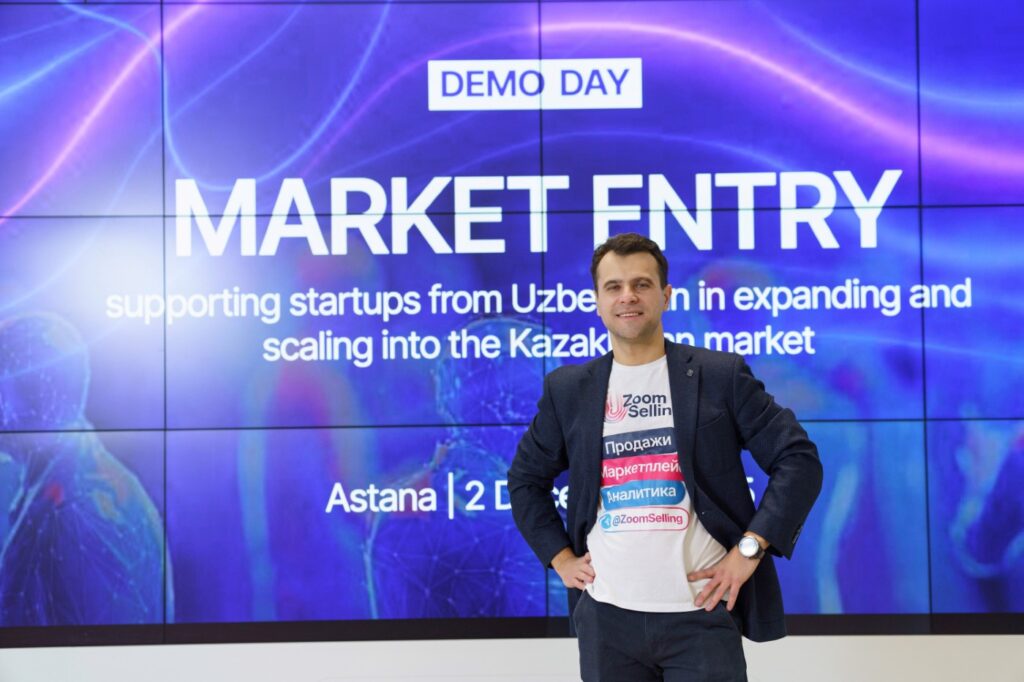
Dmitry Kovrizhko has been in IT for 20 years. He started out working in-house, then went on to launch an outsourcing company focused on developing B2B software for e-commerce and logistics. Two years ago, while building a solution for yet another client, he ended up creating ZoomSelling, an analytics platform for marketplace sellers.
As part of the «100 Startup Stories of Central Asia» project with Astana Hub, Digital Business caught up with Dmitry to talk about why analytics matter on marketplaces, how AI hallucinations can mess with your business, and what sets beginner sellers apart from big distributors.
«The e-commerce boom in Central Asia is still going strong»
— How did your career path take shape, and what got you into IT?
— I’ve been in the industry for 20 years. I got into programming early on at university. I used to read a lot about ASP, which is Microsoft’s technology for building dynamic web pages, and BASIC, a classic programming language for beginners. I also wrote macros in VBA to automate repetitive tasks and built a few small websites along the way.

I mostly worked as a software developer when I was employed. After gaining some experience, I started my own company focused on building custom software for clients in the US and Europe. For the past 10 years, I’ve been focused on growing the B2B e-commerce side of the business. We handle large-scale projects, like integrating ERP systems and setting up logistics and warehouse management. Our clients usually need custom solutions that have to be tailored closely to their specific processes.
We opened an office in IT PARK Uzbekistan back in 2022. Clients started coming in from the local market, and now we’re fully settled in Tashkent.
— Can you talk about how you went from outsourcing projects to launching your own product, ZoomSelling?
— It happened almost by accident. In 2023, one of our clients, a large coffee machine distributor, asked us to run a project analysis on the Uzbek marketplace Uzum. We started looking into what tools were already available, but couldn’t find anything that really fit. So we ended up building our own analytics service.
Around that same time, e-commerce in Uzbekistan started booming. It felt like everything lined up. The market was growing fast, and we had a solid sales analytics solution in place. All we needed to do was turn it into a full product. That’s how ZoomSelling shifted from an internal project to our core business.
The thing is, custom B2B projects are tough. You have to spend a lot of time networking and dealing with long sales cycles just to land a single order. As ZoomSelling started picking up speed, our other areas began to slow down. We ended up keeping just a few long-time clients and projects on support.

We saw that ZoomSelling was really gaining traction, so we decided to focus on it. The e-commerce market in Central Asia is still growing fast, and there’s more than enough to go around. There’s room to grow, raise the average check, and scale out even further.
— How many people are on your team?
— The core team at ZoomSelling is just four of us — the CTO, two developers, and me as the CEO. When needed, we bring in people from other parts of the company to help out.
«We focus on helping sellers grow their expertise and knowledge, which benefits the marketplaces too»
— How does ZoomSelling work?
— We give marketplace sellers the analytics they need to grow. The platform helps them understand their niche, find the right SEO keywords, boost their product listings in search, and track important stats.
Our analytics has two parts. The first is external, meaning market data. Technically speaking, it's just data parsing, but in simple terms, we collect and process public info. We track trends, monitor performance, and generate forecasts. There's no need for any special permissions from marketplaces. Different platforms react to external analytics in their own way. Some are totally fine with it, others not so much. Some even set up tech barriers to block bots and tools like ours.
Take Kaspi and Teez, for example. Their data collection models are completely different. With Kaspi, you’re dealing with several million product listings, so setting up a fast and efficient way to go through all that data is technically challenging. It’s much easier to work with newer, growing marketplaces.
The second part of our analytics is internal. If sellers give us access to their account data, we work through the marketplace’s API.
Analytics services, including ZoomSelling, help sellers build their expertise and knowledge, which is a win for marketplaces too. Uzum, for example, is interested in bringing well-prepared sellers onto the platform. These sellers offer a wider range of products, go deeper into their niches, help drive prices down, and boost competition. For a marketplace, attracting buyers through a broad selection and affordable pricing is key.
— If marketplaces are interested in giving sellers access to analytics, why don’t they just build their own native tools like ZoomSelling?
— The main business of a marketplace is sales, or more precisely, earning commission from those sales. That’s their core focus. Seller tools usually come second. There are other priorities that drive order volume faster, like better search, running promotions, gamification features, or one-click purchases.
Seller analytics usually ends up pretty low on the marketplace’s priority list. We, on the other hand, stay focused and can build a more detailed and in-depth service. We give sellers full access to their data along with sales forecasts, which they’re not likely to get from the platform itself.
«Around 60 to 70 percent of our clients are beginners»
— What kind of analytics do you offer your clients?
— First off, it depends on who the client is — a big distributor, a vendor, or a solo entrepreneur just getting started. Each one has different goals and ways of working on a marketplace. Some are looking to understand the market, others want to track how their partner networks are doing, and some just want to hit steady sales.

For large retailers, it’s important to separate online and offline sales. For example, the Chinese sportswear brand Li-Ning uses ZoomSelling to analyze customer demand in different niches and to plan inventory for both online and offline channels. On top of that, our SEO and ad tools help them boost sales.
— Who's your main type of client? Big players or smaller sellers?
— The biggest group by far is individual entrepreneurs. In Uzbekistan, around 60 to 70 percent of our clients are beginners who are just testing the market. Naturally, that’s also where we see the highest churn. A lot of them come to ZoomSelling just to get a feel for things, and there’s no guarantee they’ll actually become sellers. Most of our revenue comes from long-time sellers, and they’re not necessarily big players. What matters is that they’ve been selling steadily and successfully. They usually buy a full year of analytics right away. In that group, churn is pretty low, around 5 to 10 percent. In total, we’ve had over 200 clients purchase a subscription to the service.
«There was a case where a major clothing distributor tripled their sales»
— Big data, analytics, and sales forecasting all seem like a natural fit for AI. Do you use it in ZoomSelling?
— Yes, we do use AI for raw data analysis. And you can really see that in just a year, the quality of AI models has improved a lot. The results we get now are good enough to pass straight to the client. But there’s an important point. You have to clearly instruct the language model to rely only on your own data, not to go off into generalizations. Without a solid data source, the AI will just give vague answers or start hallucinating. We’ve also built in a chatbot that sellers can interact with directly.
Sometimes, the AI's recommendations differ from ours. For example, when there are very few active sellers or product listings in a certain niche, the AI might interpret that as low competition. Fewer sellers must mean an easier entry point, right? But in reality, it’s not that simple.
A large number of sellers usually means the niche is easier to enter. It likely doesn’t have a dominant player. On the other hand, if two or three stores control 50 percent of the market in that category, that’s a red flag. It probably means direct distributors are running the show, and a solo entrepreneur won’t be able to compete with them.

What’s important is that our analytics doesn’t rely entirely on artificial intelligence. Even without it, the value of the product stays the same.
— How do you measure whether ZoomSelling is actually working?
— Let’s be real. There are sellers who’ve been doing well for years without using any analytics tools. But that’s happening less and less now. Tools like these help you understand your niche better, promote your products more effectively, and get a clearer picture of what your competitors are up to.
There was a case where a major clothing distributor tripled their sales thanks to ZoomSelling. It happened through a full set of improvements: updating their ads, fixing their product listings, adjusting pricing, and working on SEO. We found relevant keywords that their competitors weren’t using at all. For example, in the sneaker niche, no one was promoting their products under the keyword “Skechers.” That simple insight helped them boost their reach in a big way.
Once a store starts looking at the metrics and understands where it stands, it begins to see both the marketplace and its own product lineup differently. The seller becomes more flexible and adaptive, starts testing different approaches to ads and optimization, and works on growing the sales funnel.
For new sellers, even a simple product page audit can lead to quick results. When you improve the content, pick the right SEO keywords, and set up internal ads, things usually start to improve. Just getting the basics right can already boost sales.
«Our target markets are Uzbekistan and Kazakhstan»
— Is ZoomSelling financially successful?
— Yes, we’re in the black and operating profitably. Our MRR is getting close to $15,000, and over the past year it’s averaged around $12,000. We’ve got more than 200 regular paying subscribers. On top of that, there are plenty of one-time users. Most of them are new sellers who want to explore the market, figure out the right time to jump in, see which products are trending, and understand what’s happening in different niches. We’re working on expanding the service for this group to reduce churn.

Big clients don’t need you to explain what to do with the numbers — they already know how to use the data. But beginners usually need help just understanding the analytics in the first place. It’s important to give them a clear idea of which products are likely to sell well.
— In which countries is the project operating?
— Our target markets are Uzbekistan and Kazakhstan. In Uzbekistan, we’re working with Uzum and rolling out digital tools for Yandex Market. In Kazakhstan, we’re currently going through an acceleration program with Astana Hub, and at the same time, we’ve launched services for Kaspi and Teez. We already have our first subscribers there and a strong pipeline of businesses interested in joining ZoomSelling.
«In our long-term plans, we’re aiming to cover all of Central Asia»
— What brought you to the Astana Hub accelerator, and what were you hoping to get out of it?
— We’d been keeping an eye on Kaspi for a while and actually did two market analysis projects for that marketplace last year. So we already knew it was the right direction to move in. When we heard about the Market Entry program that helps Uzbek startups enter the Kazakh market, we jumped at the opportunity.
An accelerator program really shifts your mindset, and you only start to realize it once you're in it. Just two months ago, I probably wouldn’t have been able to explain to myself why it was necessary. From the outside, people who haven’t been through an accelerator often think, “Come on, I know my own business. What are they really going to teach me?” But once you’re inside the program, you start to understand how much you actually don’t know. Right now, we’re not just launching ZoomSelling in Kazakhstan. We’ve also decided to rethink the product back in Uzbekistan. We need to make changes to how we build our sales funnel, track key metrics, and interact with clients.
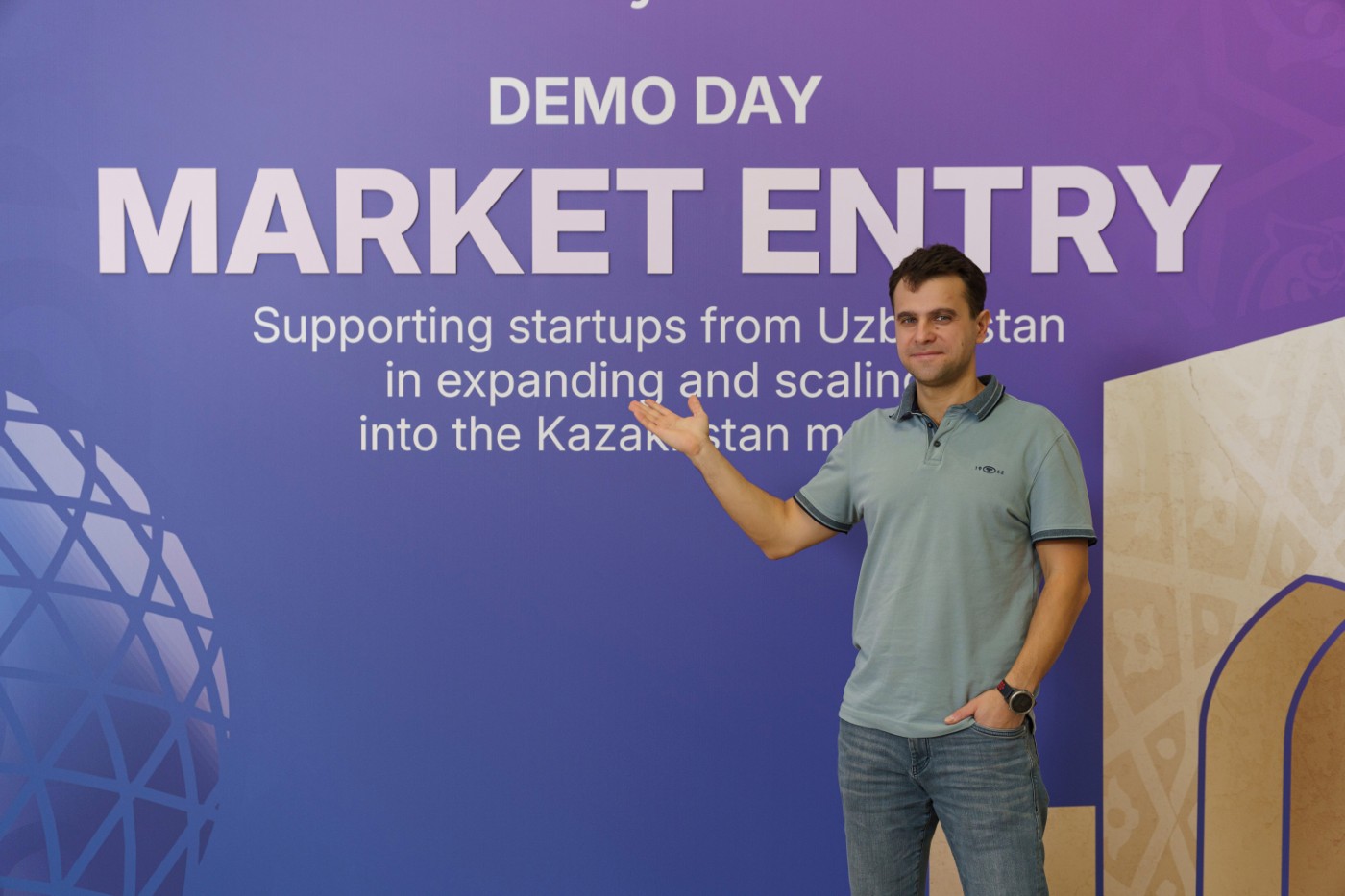
The trackers have an incredible amount of experience. They can take a quick look at your product, immediately grasp the core of it, and ask the right questions that really get you thinking. But they never tell you what to do. And that’s the best part — it pushes you, as the founder, to figure out how to improve your product on your own.
— What’s coming to ZoomSelling in the next year?
— We're working on making the platform more advanced, mainly to support features for Uzum and Kaspi, like better ad tools on those marketplaces. Looking further ahead, we plan to expand across all of Central Asia and maybe into the Caucasus too. Next year is definitely going to be all about Kazakhstan.